Despite a million immigrants over the past two decades, the percentage of Jews in the Israeli population is declining.
By Arnon Soffer
Haaretz News
I took up Moshe Arens' suggestion, made on this page last month ("Demographic bogey" ), to take a look at the figures of the Central Bureau of Statistics that he finds so encouraging. And what do I find? For one, that the statistics bureau deals only with data within the Green Line, namely Israel, and data about the Jews of Judea and Samaria. As far as the Arabs in the territories are concerned, we will have to look elsewhere.
What is so encouraging about the figures for 2010? I found that within Israel, Jews constitute 75.5 percent of the population, but that the proportion in 1998 was 79.2 percent, and 81.7 percent in 1988. In other words, the percentage of Jews in the Israeli population is constantly declining, in spite of the influx of about 1 million immigrants over the past two decades.
According to the forecasts, in 2015 the percentage of Jews will decline to 73.5 percent, and will drop to 70.6 percent by 2025. Only in 2030 will there be, for the first time, a miniscule increase in the proportion of Jews, bringing us to 72 percent. What is there here to make Arens happy?
If to this harsh data we add foreign workers, immigrants from Africa, tourists who did not return to their homeland and Palestinians who enter the country and don't return home, then the percentage of Jews drops to 70 percent of the inhabitants of Israel. What's so wonderful here? It's an unpleasant picture.
But in recent months Arens has been preaching in favor of the annexation of Judea and Samaria to Israel (according to him, that is the way to prevent the existence of two states in this narrow space ). Of course, that poses a serious demographic problem. So what does Arens do? He receives data from some American team, which enables him to count how many Arabs live in Judea and Samaria, how many have left, how many are leaving and how many will leave the Land of Israel in the future. He also keeps tabs on the number of births and deaths and asserts "scientifically" that only 1.5 million people live in Judea and Samaria. If we erase 1 million Arabs from the board, then there is a Jewish majority in the Land of Israel; the redeemer has come to Zion and the demographic bogey is dead.
But I don't rely on American teams, and instead turn to the head of the Civil Administration in the Israel Defense Forces, who reports to me that there are presently about 2.6 million Palestinians living in Judea and Samaria, and in Gaza their number is estimated at 1.5 million. Anyone who doesn't rely on the IDF can access the figures of the Palestinian statistics bureau, whose last census was held in 2007, under the aegis of representatives of the Norwegian government; their numbers are similar to those of the IDF (after subtracting the residents of Jerusalem who were already counted by the Israeli statistics bureau ). In both cases it turns out that, not counting Gaza or foreign residents, Jews constitute 59 percent of the total population in the Land of Israel. If you do count Gaza and foreign residents, there are somewhat fewer Jews than there are Palestinian Arabs.
There is no choice but to deal with forecasts for the next decade or two, and it turns out that by then the proportion of Jews will have declined to 42 percent. That means an end to the Jewish entity in the Middle East. The demographic bogey, then, is alive and threatening after all, and we still haven't discussed the density of the population or the issues of internal security that we can expect from a hostile population of millions of people.
There is no choice but to tell Arens that the right-wing Betar ideology on which he was raised went bankrupt a long time ago and it won't help if he virtually erases 1.5 million Arabs from the territories. They are here. The conclusion is frighteningly simple: Whoever brings about the establishment of a single binational state in the Land of Israel will doom the Jews of Israel to destruction. We, the sane majority who still live here, will not allow anyone to do that.
"Sane majority"?? Not with that Gottdammerung, Masada, Jonestown, Waco, lunacy being
held as a threat to Palestinians and the whole Middle East. The U.N. needs to step in and finally take responsibility for the enormous injustice they created for Palestinians by allowing European Jews to seize control of virtually all of Palestine. European descended Jews turned Israelis have proven themselves racists who are conducting an ethnic cleansing campaign to rid Israel and even what's left of Palestine of Palestinians. The U.N. must take control of the rogue state of Israel that continually breaks U.N. resolutions protecting Palestinian rights and sovereignty. The U.S. is the accomplice in Israeli crimes against humanity by supplying the weapons and money needed to carry out Israel's destruction of Palestinian society. If the U.N. means anything anymore it must step up to the plate now and take action to stop Israel's aggression and defiance of international law.
Saturday, October 09, 2010

Friday, September 24, 2010
The Israeli navy fired on a Palestinian boat off the northern Gaza Strip on Friday
Haaretz
The Israeli navy fired on a Palestinian boat off the northern Gaza Strip on Friday, killing a fisherman, the territory's Hamas administration said.
An Israeli military spokeswoman confirmed that naval vessels shot at a fishing boat after it approached the limits of waters where Israel, which keeps Gaza under blockade, permits Palestinian maritime traffic.
Gaza fishermen AP June 11, 2010

Palestinian fishermen preparing their boats before leaving the Gaza City port to fish on the Mediterranean sea.
Photo by: AP
"We fired warning shots to turn them back, and when they did not respond, we fired at the boat," the spokeswoman said. "We are checking the claim that there was a casualty."
Palestinians say the Gaza fishing zone is too narrow to provide for the impoverished strip. Israel says the navy is preventing arms smuggling to Hamas and seaborne Palestinian attacks on neighbouring Israeli territory.
The Israeli navy fired on a Palestinian boat off the northern Gaza Strip on Friday, killing a fisherman, the territory's Hamas administration said.
An Israeli military spokeswoman confirmed that naval vessels shot at a fishing boat after it approached the limits of waters where Israel, which keeps Gaza under blockade, permits Palestinian maritime traffic.
Gaza fishermen AP June 11, 2010

Palestinian fishermen preparing their boats before leaving the Gaza City port to fish on the Mediterranean sea.
Photo by: AP
"We fired warning shots to turn them back, and when they did not respond, we fired at the boat," the spokeswoman said. "We are checking the claim that there was a casualty."
Palestinians say the Gaza fishing zone is too narrow to provide for the impoverished strip. Israel says the navy is preventing arms smuggling to Hamas and seaborne Palestinian attacks on neighbouring Israeli territory.
Surveys show large segments of the world population agree with the Iranian leader's "US government involvement" claims.
Ahmadinejad and the 9/11 attacks
Al Jazeera
Last Modified: 24 Sep 2010 10:21 GMT

Like Iran's president, some Americans remain unconvinced about the official story on the 9/11 attacks [GALLO/GETTY]
Mahmoud Ahmadinejad, the Iranian president, has again managed to steal the global spotlight, after levelling a series of rhetorical attacks on the US and Israel - the "Zionist entity" in his words - during an address to the UN General Assembly.
Specifically, he told world leaders on Thursday that the "majority of the American people, as well as most nations and politicians around the world agree" that "some segments within the US government orchestrated" the September 11, 2001, attacks in order to "reverse the declining American economy" and to justify US military operations in the Middle East to "save the Zionist regime".
Western diplomats, including the US, Canada and the 27-member EU bloc, walked out during the tirade. PJ Crowley, the US assistant secretary of state, told Al Jazeera that the statement was "totally outrageous".
But, for better or worse, significant segments of the world's population are sympathetic to Ahmadinejad's "conspiratorial" view of the 9/11 attacks which killed about 3,000 people.
Standard view
The US government has determined that 19 hijackers, mostly born in Saudi Arabia and belonging to al-Qaeda, crashed two passenger jets into the World Trade Centre in New York City and one into the Pentagon, located outside Washington, DC, on September, 11, 2001.
A fourth plane crashed into a field in rural Pennsylvania after some of its passengers attempted to retake control of the aircraft. There were no survivors from any of the flights.
Some of the group's members, including Osama bin Laden, the head of al-Qaeda, had trained in Afghanistan prior to the attacks - training which precipitated the 2001 US-led invasion of the country.
Bin Laden initially denied, but later admitted in a taped statement aired on Al Jazeera in 2004, planning the attacks.
About 46 per cent of the world's people believed that al-Qaeda launched the 9/11 attacks, while 15 per cent think the US government was behind the assault, and seven per cent blamed Israel, according to a
2008 world public opinion study carried out by the Program on International Policy (PIPA) Attitudes at the University of Maryland which interviewed 16,063 people worldwide.
But Ahmadinejad views himself as a leader in the Arab and Muslim worlds. And, in these regions, surveys show significant sectors of the population believe that the US and Israel launched the 9/11 attacks to meet their own geopolitical goals.
In Jordan, 31 per cent of those polled by PIPA believed Israel was behind the attacks, while only 11 per cent thought it was al-Qaeda. Likewise, 43 per cent of Egyptians blamed Israel, and 12 per cent
thought the US was responsible, while only 16 per cent thought al-Qaeda brought down the towers.
A 2006 poll from Scrippsnewssays 36 per cent of Americans consider it "very likely" or "somewhat likely" that US government officials either allowed the attacks to be carried or launched the attacks
themselves.
'Alternative' perspectives
The most popular website on so-called alternative views on the September 11, 2001, attacks seems to be 911truth.org.The site acts as a clearing house for an array of various views and refuses to articulate an exact position on who it believes launched the attacks and why. Rather, it poses a series of questions, while offering readers the "Top 40 Reasons to Doubt the Official Story".
A "documentary" called Loose Change questioning the official 9/11 narrative, has been popular among activist groups - folks who wear warm tuque hats in the summer and sport multiple facial piercings and black bananas - and other more traditional doubters.
"That 19 hijackers are going to completely bypass security and crash four commercial airliners in a span of two hours, with no interruption from the military forces, in the most guarded airspace in the United
States and the world? That to me is a conspiracy theory," Korey Rowe, the film's director, told Time magazine.
Mainstream media in the West, and even the US government itself, have felt a need to respond to these theories. The US state department's Bureau of International Information Programshas a website devoted to debunking the "top September 11 conspiracy theories".
In a piece titled "Why the 9/11 Conspiracy Theories Won't Go Away", Time argues that what many would call conspiracy theories are "not a fringe phenomenon".
'Planned demolition'
Some of the more unconventional claims include that the twin towers did not collapse from the impact of two Being 767s and the petrol stored in their tanks. Rather, the buildings collapsed in a planned, controlled demolition - perhaps through explosions in the basement.
Another popular theory is that a missile fired by elements from within the US government hit the Pentagon, rather than an aircraft. Some of the "alternative" or "conspiratorial" views come from people
who seem like serious scholars.
The Centre for Research on Globalisation, a site which frequently publishes articles critical of the "deliberate suppression" of answers on 9/11 and the "falsification of evidence" by the US government, has Dr Michel Chossudovsky, a professor at the University of Ottawa and author of the well-researched book The Globalisation of Poverty, as one of its leading members.
Posting on Twitter, a user called Martynnorris says: "Which is more childish, the rantings of Ahmadinejad or the faux shock and the offended face?"
Regardless of what polite opinion thinks inside the Washington DC beltway, Ahmadinejad is speaking to a significant global constituency. There is little evidence to suggest that they include "the majority of the American people, as well as most nations and politicians around the world", as the Iranian leader said in his UN speech. But the 9/11 "conspiracy theories" are not a fringe phenomenon either.
Al Jazeera
Last Modified: 24 Sep 2010 10:21 GMT

Like Iran's president, some Americans remain unconvinced about the official story on the 9/11 attacks [GALLO/GETTY]
Mahmoud Ahmadinejad, the Iranian president, has again managed to steal the global spotlight, after levelling a series of rhetorical attacks on the US and Israel - the "Zionist entity" in his words - during an address to the UN General Assembly.
Specifically, he told world leaders on Thursday that the "majority of the American people, as well as most nations and politicians around the world agree" that "some segments within the US government orchestrated" the September 11, 2001, attacks in order to "reverse the declining American economy" and to justify US military operations in the Middle East to "save the Zionist regime".
Western diplomats, including the US, Canada and the 27-member EU bloc, walked out during the tirade. PJ Crowley, the US assistant secretary of state, told Al Jazeera that the statement was "totally outrageous".
But, for better or worse, significant segments of the world's population are sympathetic to Ahmadinejad's "conspiratorial" view of the 9/11 attacks which killed about 3,000 people.
Standard view
The US government has determined that 19 hijackers, mostly born in Saudi Arabia and belonging to al-Qaeda, crashed two passenger jets into the World Trade Centre in New York City and one into the Pentagon, located outside Washington, DC, on September, 11, 2001.
A fourth plane crashed into a field in rural Pennsylvania after some of its passengers attempted to retake control of the aircraft. There were no survivors from any of the flights.
Some of the group's members, including Osama bin Laden, the head of al-Qaeda, had trained in Afghanistan prior to the attacks - training which precipitated the 2001 US-led invasion of the country.
Bin Laden initially denied, but later admitted in a taped statement aired on Al Jazeera in 2004, planning the attacks.
About 46 per cent of the world's people believed that al-Qaeda launched the 9/11 attacks, while 15 per cent think the US government was behind the assault, and seven per cent blamed Israel, according to a
2008 world public opinion study carried out by the Program on International Policy (PIPA) Attitudes at the University of Maryland which interviewed 16,063 people worldwide.
But Ahmadinejad views himself as a leader in the Arab and Muslim worlds. And, in these regions, surveys show significant sectors of the population believe that the US and Israel launched the 9/11 attacks to meet their own geopolitical goals.
In Jordan, 31 per cent of those polled by PIPA believed Israel was behind the attacks, while only 11 per cent thought it was al-Qaeda. Likewise, 43 per cent of Egyptians blamed Israel, and 12 per cent
thought the US was responsible, while only 16 per cent thought al-Qaeda brought down the towers.
A 2006 poll from Scrippsnewssays 36 per cent of Americans consider it "very likely" or "somewhat likely" that US government officials either allowed the attacks to be carried or launched the attacks
themselves.
'Alternative' perspectives
The most popular website on so-called alternative views on the September 11, 2001, attacks seems to be 911truth.org.The site acts as a clearing house for an array of various views and refuses to articulate an exact position on who it believes launched the attacks and why. Rather, it poses a series of questions, while offering readers the "Top 40 Reasons to Doubt the Official Story".
A "documentary" called Loose Change questioning the official 9/11 narrative, has been popular among activist groups - folks who wear warm tuque hats in the summer and sport multiple facial piercings and black bananas - and other more traditional doubters.
"That 19 hijackers are going to completely bypass security and crash four commercial airliners in a span of two hours, with no interruption from the military forces, in the most guarded airspace in the United
States and the world? That to me is a conspiracy theory," Korey Rowe, the film's director, told Time magazine.
Mainstream media in the West, and even the US government itself, have felt a need to respond to these theories. The US state department's Bureau of International Information Programshas a website devoted to debunking the "top September 11 conspiracy theories".
In a piece titled "Why the 9/11 Conspiracy Theories Won't Go Away", Time argues that what many would call conspiracy theories are "not a fringe phenomenon".
'Planned demolition'
Some of the more unconventional claims include that the twin towers did not collapse from the impact of two Being 767s and the petrol stored in their tanks. Rather, the buildings collapsed in a planned, controlled demolition - perhaps through explosions in the basement.
Another popular theory is that a missile fired by elements from within the US government hit the Pentagon, rather than an aircraft. Some of the "alternative" or "conspiratorial" views come from people
who seem like serious scholars.
The Centre for Research on Globalisation, a site which frequently publishes articles critical of the "deliberate suppression" of answers on 9/11 and the "falsification of evidence" by the US government, has Dr Michel Chossudovsky, a professor at the University of Ottawa and author of the well-researched book The Globalisation of Poverty, as one of its leading members.
Posting on Twitter, a user called Martynnorris says: "Which is more childish, the rantings of Ahmadinejad or the faux shock and the offended face?"
Regardless of what polite opinion thinks inside the Washington DC beltway, Ahmadinejad is speaking to a significant global constituency. There is little evidence to suggest that they include "the majority of the American people, as well as most nations and politicians around the world", as the Iranian leader said in his UN speech. But the 9/11 "conspiracy theories" are not a fringe phenomenon either.
Thursday, September 23, 2010
Telling it like it is: Ahmadinejad tells U.N. most blame U.S. government for 9/11
By Louis Charbonneau
UNITED NATIONS |
Thu Sep 23, 2010 8:43pm EDT

UNITED NATIONS (Reuters) - Iranian President Mahmoud Ahmadinejad told the United Nations on Thursday most people believe the U.S. government was behind the attacks of September 11, 2001, prompting the U.S. and European delegations to leave the hall in protest.
Addressing the General Assembly, he said it was mostly U.S. government officials and statesmen who believed al Qaeda Islamist militants carried out the suicide hijacking attacks that brought down New York's World Trade Center -- less than 4 miles from where the Iranian president was speaking.
Another theory, he said, was "that some segments within the U.S. government orchestrated the attack to reverse the declining American economy, and its grips on the Middle East, in order to save the Zionist regime." Ahmadinejad usually refers to Israel as the "Zionist regime."
"The majority of the American people as well as most nations and politicians around the world agree with this view," Ahmadinejad told the 192-nation assembly, calling on the United Nations to establish "an independent fact-finding group" to look into the events of September 11.
As in past years, the U.S. delegation walked out during Ahmadinejad's speech. It was joined by all 27 European Union delegations and several other countries.
Mark Kornblau, spokesman for the U.S. mission to the United Nations, said Ahmadinejad chose "to spout vile conspiracy theories and anti-Semitic slurs that are as abhorrent and delusional as they are predictable."
White House spokesman Bill Burton said President Barack Obama thought the comments "utterly outrageous and offensive -- especially in the city where the 9/11 attacks occurred."
EU foreign policy chief Catherine Ashton said the remarks were "outrageous and unacceptable."
'COVERED UP'
Ahmadinejad said some evidence that could support alternative theories had been "covered up" -- passports located in the rubble and a video of an unknown individual who had been "involved in oil deals with some American officials."
As he had in past years, the Iranian president used the General Assembly podium to attack Iran's other archfoe, Israel, and to defend the right of his country to a nuclear program that Western powers fear is aimed at developing arms.
"This regime (Israel), which enjoys the absolute support of some Western countries, regularly threatens the countries in the region and continues publicly announced assassination of Palestinian figures and others, while Palestinian defenders ... are labeled as terrorists and anti-Semites," he said.
"All values, even the freedom of expression, in Europe and the United States are being sacrificed at the altar of Zionism," Ahmadinejad said.
The Iranian president previously raised doubts about the Holocaust of the Jews in World War Two and said Israel had no right to exist.
Tehran has been hit with four rounds of U.N. sanctions for refusing to halt its nuclear enrichment program. Obama earlier told the assembly the door to diplomacy was still open for Iran, but it needed to prove its atomic program is peaceful, as it says it is.
On Wednesday, foreign ministers from the five permanent U.N. Security Council members and Germany said they hoped for a negotiated solution to the standoff with Tehran.
Ahmadinejad criticized the Security Council for imposing sanctions on his country, saying the penalties were "destroying the remaining credibility" of the 15-nation body.
(Additional reporting by Steve Holland; Editing by Peter Cooney)
UNITED NATIONS |
Thu Sep 23, 2010 8:43pm EDT
UNITED NATIONS (Reuters) - Iranian President Mahmoud Ahmadinejad told the United Nations on Thursday most people believe the U.S. government was behind the attacks of September 11, 2001, prompting the U.S. and European delegations to leave the hall in protest.
Addressing the General Assembly, he said it was mostly U.S. government officials and statesmen who believed al Qaeda Islamist militants carried out the suicide hijacking attacks that brought down New York's World Trade Center -- less than 4 miles from where the Iranian president was speaking.
Another theory, he said, was "that some segments within the U.S. government orchestrated the attack to reverse the declining American economy, and its grips on the Middle East, in order to save the Zionist regime." Ahmadinejad usually refers to Israel as the "Zionist regime."
"The majority of the American people as well as most nations and politicians around the world agree with this view," Ahmadinejad told the 192-nation assembly, calling on the United Nations to establish "an independent fact-finding group" to look into the events of September 11.
As in past years, the U.S. delegation walked out during Ahmadinejad's speech. It was joined by all 27 European Union delegations and several other countries.
Mark Kornblau, spokesman for the U.S. mission to the United Nations, said Ahmadinejad chose "to spout vile conspiracy theories and anti-Semitic slurs that are as abhorrent and delusional as they are predictable."
White House spokesman Bill Burton said President Barack Obama thought the comments "utterly outrageous and offensive -- especially in the city where the 9/11 attacks occurred."
EU foreign policy chief Catherine Ashton said the remarks were "outrageous and unacceptable."
'COVERED UP'
Ahmadinejad said some evidence that could support alternative theories had been "covered up" -- passports located in the rubble and a video of an unknown individual who had been "involved in oil deals with some American officials."
As he had in past years, the Iranian president used the General Assembly podium to attack Iran's other archfoe, Israel, and to defend the right of his country to a nuclear program that Western powers fear is aimed at developing arms.
"This regime (Israel), which enjoys the absolute support of some Western countries, regularly threatens the countries in the region and continues publicly announced assassination of Palestinian figures and others, while Palestinian defenders ... are labeled as terrorists and anti-Semites," he said.
"All values, even the freedom of expression, in Europe and the United States are being sacrificed at the altar of Zionism," Ahmadinejad said.
The Iranian president previously raised doubts about the Holocaust of the Jews in World War Two and said Israel had no right to exist.
Tehran has been hit with four rounds of U.N. sanctions for refusing to halt its nuclear enrichment program. Obama earlier told the assembly the door to diplomacy was still open for Iran, but it needed to prove its atomic program is peaceful, as it says it is.
On Wednesday, foreign ministers from the five permanent U.N. Security Council members and Germany said they hoped for a negotiated solution to the standoff with Tehran.
Ahmadinejad criticized the Security Council for imposing sanctions on his country, saying the penalties were "destroying the remaining credibility" of the 15-nation body.
(Additional reporting by Steve Holland; Editing by Peter Cooney)
Turkish president demands apology for flotilla at UN
By JORDANA HORN
Jerusalem Post
09/23/2010 19:01
Gul calls 'Marmara' raid an "unacceptable act in international law,"; calls on Israel to put an end to the "humanitarian tragedy in Gaza.”
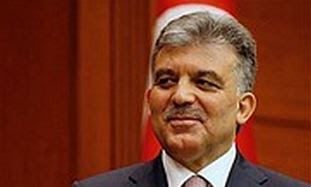
NEW YORK – Addressing the General Assembly at the United Nations on Thursday, Turkish President Abdullah Gul referenced the May 31 Gaza flotilla incident and demanded both a formal apology from Israel as well as compensation for the victims.
Calling the deaths on the Mavi Marmara an “unacceptable act in international law,” Gul said Turkey is owed “a formal apology and compensation for the aggrieved families of the victims and the injured people” by Israel.
RELATED:
Turkish president cancels New York meeting with Peres
Gul: Israel unable to act rationally
Gul referenced the flotilla incident in part of his remarks focusing on the political component of the General Assembly’s agenda, noting that there is “no shortage of regional issues” to be discussed.
“Peace in the Middle East holds the key to a peaceful and stable future in the world,” Gul said, addressing the body in English. “Unfortunately, the absence of peace there has had serious and adverse consequences for the rest of the world.”
It would be difficult to make progress toward permanent peace, Gul said, “unless we put an end to the humanitarian tragedy in Gaza.”
Gul attached significance to UN Secretary General Ban Ki-Moon’s Panel of Inquiry into the May 31 flotilla incident, as well as the fact finding mission of the Geneva-based Human Rights Council.
Gul said he is “pleased” with the Human Rights Council report, which he said offered “a solid legal framework for establishing the facts about the incident.” Many NGOs, including UN Watch and NGO Monitor, have deemed the work of the Human Rights Council panel irreparably biased against Israel.
Referencing Iran very briefly, Gul said there is “no alternative to diplomacy” in ensuring Iran’s conformity to International Atomic Energy Agency norms.
Jerusalem Post
09/23/2010 19:01
Gul calls 'Marmara' raid an "unacceptable act in international law,"; calls on Israel to put an end to the "humanitarian tragedy in Gaza.”
NEW YORK – Addressing the General Assembly at the United Nations on Thursday, Turkish President Abdullah Gul referenced the May 31 Gaza flotilla incident and demanded both a formal apology from Israel as well as compensation for the victims.
Calling the deaths on the Mavi Marmara an “unacceptable act in international law,” Gul said Turkey is owed “a formal apology and compensation for the aggrieved families of the victims and the injured people” by Israel.
RELATED:
Turkish president cancels New York meeting with Peres
Gul: Israel unable to act rationally
Gul referenced the flotilla incident in part of his remarks focusing on the political component of the General Assembly’s agenda, noting that there is “no shortage of regional issues” to be discussed.
“Peace in the Middle East holds the key to a peaceful and stable future in the world,” Gul said, addressing the body in English. “Unfortunately, the absence of peace there has had serious and adverse consequences for the rest of the world.”
It would be difficult to make progress toward permanent peace, Gul said, “unless we put an end to the humanitarian tragedy in Gaza.”
Gul attached significance to UN Secretary General Ban Ki-Moon’s Panel of Inquiry into the May 31 flotilla incident, as well as the fact finding mission of the Geneva-based Human Rights Council.
Gul said he is “pleased” with the Human Rights Council report, which he said offered “a solid legal framework for establishing the facts about the incident.” Many NGOs, including UN Watch and NGO Monitor, have deemed the work of the Human Rights Council panel irreparably biased against Israel.
Referencing Iran very briefly, Gul said there is “no alternative to diplomacy” in ensuring Iran’s conformity to International Atomic Energy Agency norms.
Wednesday, September 22, 2010
Israeli raid on Gaza aid flotilla broke law - UN probe

Mavi Marmara vessel The raid on the Mavi Marmara resulted in the deaths of nine pro-Palestinian activists
Israel's military broke international laws during its raid on a Gaza-bound aid flotilla, a UN Human Rights Council investigation says.
The three-member panel said the Israeli commandoes' response to the flotilla was "disproportionate" and "betrayed an unacceptable level of brutality".
Israel insists that its soldiers acted in self-defence during the 31 May raid.
Nine people were killed on board a Turkish ship as it tried to breach an Israeli naval blockade of Gaza.
There was widespread international criticism of Israel's actions, which severely strained relations with its long-time Muslim ally, Turkey.
Israeli inquiry
In a 56-page report, the UN panel said: "There is clear evidence to support prosecutions of the following crimes within the terms of article 147 of the Fourth Geneva Convention: willful killing; torture or inhuman treatment; willfully causing great suffering or serious injury to body or health".
Continue reading the main story
“Start Quote
The conduct of the Israeli military and other personnel towards the flotilla passengers was not only disproportionate to the occasion but demonstrated levels of totally unnecessary and incredible violence.”
The Convention is an international treaty governing the protection of civilians in times of war.
The UN fact-finding mission also said the Israeli blockade of the Palestinian territory was "unlawful" because of a humanitarian crisis there.
Just before the report was released, Israel dismissed the Human Rights Council as being biased, politicised and extremist.
Israel also said that work on its own independent inquiry into the raid on the Mavi Mamara ship was still continuing.
The Israeli investigation has two foreign observers, but critics say its remit is too narrow.
Last month, the head of Israel's military, Lt Gen Gabi Ashkenazi, defended its troops' use of live ammunition during the raid. He told the Israeli inquiry that the soldiers had underestimated the threat and should have used more force to subdue activists before boarding.
Those aboard the Mavi Marmara, where the activists were killed, say the commandos opened fire as soon as they boarded the vessel, which was in international waters at the time.
There is also a separate UN enquiry - ordered by UN Secretary General Ban Ki-moon - into the raid.
Friday, September 17, 2010
Hamas member’s killing flies under Israeli public’s radar
Patrick Martin's notes from the Middle East
Friday, September 17, 2010 7:06 PM
Patrick Martin

Latify Abu Shelbayeh holds a portrait of her husband Iyad, a Hamas member, in the bedroom of their home during his funeral in the Nour Shams refugee camp near the West Bank town of Tulkarm on Sept. 17, 2010.
Israeli forces burst into the home of a senior member of Hamas early Friday morning and killed him with three bullets to the chest, though few Israelis know anything about it.
It appears to have been a “targeted killing,” the first of a Hamas member in the West Bank for more than two years. Palestinian Prime Minister Salam Fayyad – no friend of Hamas – called it a “dangerous escalation” in tensions between Israelis and Palestinians.
The killing took place just a day after U.S. Secretary of State Hillary Clinton left the area following two days of peace talks between Israeli and Palestinian leaders.
And it came just hours before Israelis celebrated Yom Kippur, the holiest of Jewish holidays. As a result, there was almost no news of the killing in Israeli media – no newspapers are published Saturday, and almost all Israeli broadcasting goes off the air at midday on Friday.
Hundreds of Palestinians did turn out as the body of Iyad Shilbayeh, 38, was borne through the streets of the Nur Shams refugee camp on the outskirts of this Palestinian town, 10 kilometres east of the Israeli seaside city of Netanya.
The fact that the camp is under the heavy thumb of Palestinian Authority security forces didn’t prevent the people from shouting out slogans supporting their “martyr” and praising the armed struggle against Israel.
“Proceed, Hamas, proceed,” they shouted. “You are the canon and we are the shells.”
PA security forces have rounded up hundreds of suspected Hamas members following the drive-by killing last month of four Israeli settlers outside the southern West Bank City of Hebron, and the wounding of two other settlers in another attack in the north of the West Bank.
Mr. Shilbayeh had been among those detained and interrogated and was released only a week before his killing.
An Israeli military spokeswoman said that Mr. Shilbayeh was a Hamas military commander and that troops had entered his home at 3 am intending only to arrest him. They shot him, she said, when he moved in their direction after they had told him to halt.
A large pool of blood could be seen on the rug at the foot of Mr. and Mrs. Shilbayeh’s double bed, and the bedroom showed little signs of a struggle or any evidence of other bullets having been fired.
Hamas officials on Gaza said Mr. Shilbayeh’s killing will be avenged, and as people in this camp trudged home following the interment, an Islamist member of the Palestinian Legislative Council could be heard telling someone over his cellphone that the funeral had been highly successful, with several hundred mourners in attendance.
Friday, September 17, 2010 7:06 PM
Patrick Martin

Latify Abu Shelbayeh holds a portrait of her husband Iyad, a Hamas member, in the bedroom of their home during his funeral in the Nour Shams refugee camp near the West Bank town of Tulkarm on Sept. 17, 2010.
Israeli forces burst into the home of a senior member of Hamas early Friday morning and killed him with three bullets to the chest, though few Israelis know anything about it.
It appears to have been a “targeted killing,” the first of a Hamas member in the West Bank for more than two years. Palestinian Prime Minister Salam Fayyad – no friend of Hamas – called it a “dangerous escalation” in tensions between Israelis and Palestinians.
The killing took place just a day after U.S. Secretary of State Hillary Clinton left the area following two days of peace talks between Israeli and Palestinian leaders.
And it came just hours before Israelis celebrated Yom Kippur, the holiest of Jewish holidays. As a result, there was almost no news of the killing in Israeli media – no newspapers are published Saturday, and almost all Israeli broadcasting goes off the air at midday on Friday.
Hundreds of Palestinians did turn out as the body of Iyad Shilbayeh, 38, was borne through the streets of the Nur Shams refugee camp on the outskirts of this Palestinian town, 10 kilometres east of the Israeli seaside city of Netanya.
The fact that the camp is under the heavy thumb of Palestinian Authority security forces didn’t prevent the people from shouting out slogans supporting their “martyr” and praising the armed struggle against Israel.
“Proceed, Hamas, proceed,” they shouted. “You are the canon and we are the shells.”
PA security forces have rounded up hundreds of suspected Hamas members following the drive-by killing last month of four Israeli settlers outside the southern West Bank City of Hebron, and the wounding of two other settlers in another attack in the north of the West Bank.
Mr. Shilbayeh had been among those detained and interrogated and was released only a week before his killing.
An Israeli military spokeswoman said that Mr. Shilbayeh was a Hamas military commander and that troops had entered his home at 3 am intending only to arrest him. They shot him, she said, when he moved in their direction after they had told him to halt.
A large pool of blood could be seen on the rug at the foot of Mr. and Mrs. Shilbayeh’s double bed, and the bedroom showed little signs of a struggle or any evidence of other bullets having been fired.
Hamas officials on Gaza said Mr. Shilbayeh’s killing will be avenged, and as people in this camp trudged home following the interment, an Islamist member of the Palestinian Legislative Council could be heard telling someone over his cellphone that the funeral had been highly successful, with several hundred mourners in attendance.
Thursday, September 16, 2010
Can ignoring Hamas lead to Israeli-Palestinian peace?
Hamas, the Islamist movement that controls Gaza, is being ignored in the ongoing Israeli-Palestinian peace talks. Some think that's a big mistake.

Palestinians stand around a crater following an Israeli air strike on smuggling tunnels in Rafah, on the border between Egypt and southern Gaza Strip, Wednesday. Hamas security officials in the Gaza Strip say an Israeli airstrike has killed one Palestinian and wounded four. The violence took place as leaders were holding peace talks in Jerusalem.
-Eyad Baba/AP
By Dan Murphy, Staff Writer
Christian Science Monitor
September 16, 2010
Boston
George Mitchell, President Obama's Middle East peace envoy, rarely misses an opportunity to mention the crucial role he played in helping bring peace to Northern Ireland.
As he makes the rounds in Washington, Jerusalem, and Damascus, trying to shepherd Israeli-Palestinian peace talks, he speaks of the skepticism that plagued the talks in Belfast that ended in the Good Friday Agreement of 1998. His point? That Northern Ireland proves that a comprehensive peace deal can be worked out between Israeli Prime Minister Benjamin Netanyahu and Palestinian Authority President Mahmoud Abbas within the next two years, which is Obama's timeline for the peace effort.
But there's a crucial missing element that will undoubtedly trouble the Israeli-Palestinian talks as they move ahead. Gaza, the Palestinian enclave ruled by the Islamist Hamas movement, is not at the table. Asked recently if the US would reach out to Hamas, Mr. Mitchell flatly said "no."
A blast of mortar fire from Gaza on Wednesday – and Israeli retaliation Thursday – served as a raucous reminder that Hamas isn't going to stand idle as the talks proceed.
"Whether you like or hate Hamas, they’re there, they're significant, and you can’t ignore them," says Ali Abunimah, author of "One Country: A Bold Proposal to End the Israeli-Palestinian Impasse" and a founder of the Electronic Intifada, a pro-Palestinian website.
"Palestinian's don’t get to choose who the Israeli leaders are. And if they did, I wouldn’t choose the current array of Israeli leaders. I'm not saying that Hamas represents all Palestinians, but it does represent a significant proportion and it’s simply unrealistic to pretend they don’t exist, or worse, try to destroy them," he says.
Israel refuses to deal with Hamas since it refuses to recognize the Jewish state's right to exist. What's more, Fatah is at odds with Hamas because of its Islamist policies and because, without access to the Gaza Strip, it's losing revenue. And the United States deems Hamas a terrorist organization.
Hamas, in turn, isn't in favor of peace talks. Its leaders argue that Mr. Abbas's decision to negotiate is providing cover for an Israeli government that continues to take chunks out of possible future Palestinian state. Gaza has about 35 percent of the Palestinians living in historic Palestine.
Mahmoud Zahar, the architect of the Hamas takeover in Gaza, said in a statement Wednesday that Abbas had proven he was "weak" for reversing a previous demand that settlement expansion be halted as a precondition for talks, and dismissed the US as an honest broker, because it will "eventually side with Israel ... building settlements, (and) confiscating Palestinian land."
Earlier this month, the group took credit for the killing of four Israelis in the West Bank.
The situation between Hamas, Fatah, Israel, and the US creates a stark contrast with the Northern Ireland talks.
In that instance, the Republican factions, most crucially the nonviolent Social Democratic and Labour Party (SDLP) and Sinn Fein, the political wing of the Irish Republican Army (IRA) then derided by the British government and Northern Irish Unionists as terrorists, had spent four years creating a unified negotiating front, however uneasy.
The British had back-channel talks of their own going on with Sinn Fein before the talks. In 1994, President Clinton invited Sinn Fein leader Gerry Adams to Washington at Mitchell's urging and over staunch British objections. Why? Mitchell then argued that it would give a man then considered a terrorist by Britain the stature with his own people to eventually negotiate a peace.
"While the Northern Ireland analogy of an eventual IRA/Sinn Fein acceptance of ceasefire and democratic rules of the game is true, they were certainly never asked to recognize the legitimacy of Northern Ireland's union with the British mainland as a precondition for entering talks," Daniel Levy, a former Israeli peace negotiator now director of the Middle East Initiative at the New America Foundation, wrote earlier this month. "As for Hamas, they can largely relax, watch the PA leadership squirm, and clip the political coupons. No incentive has been created for Hamas to OK this new peace process; in fact quite the opposite. Their spoiler role is being encouraged."
Mitchell also frequently highlights the darkness-before-the-dawn nature of international peace talks, referring to the Northern Ireland example on more than one occasion recently as "700 days of failure and one day of success."
Unfortunately, the specific conditions in Israel and Palestine are far less auspicious for peace than those that prevailed in Ireland 14 years ago.
"In Northern Ireland the British had played for many years a game of divide and rule, playing off the so-called moderate nationalists against the extremists. What changed with Mitchell and the Clinton administration is they really supported a broad nationalist front in Ireland," says Mr. Abunimah. "Now, it's exactly the opposite. You have Mitchell, Tony Blair and the Americans working to divide the Palestinians."
He says that the both US and Israeli policy is to keep Fatah (which recognizes Israel's right to exist) and Hamas separated. That, he says, is a compelling reason to doubt a meaningful outcome from current talks.
Hamas itself has occasionally struck a conciliatory tone. It offered a long-term cease-fire with Israel a few years ago and, Abunimah says, has signaled a willingness to walk a political path. But it has conditions, too. Most seriously, it demands the "right of return" to Israel and the Palestinian Territories for millions of Palestinian refugees now living in other countries. For now, however, it's hard to imagine Hamas backing down from its position and for the US and Israel to approach opening any dialog with the other Palestinians in Gaza.

Palestinians stand around a crater following an Israeli air strike on smuggling tunnels in Rafah, on the border between Egypt and southern Gaza Strip, Wednesday. Hamas security officials in the Gaza Strip say an Israeli airstrike has killed one Palestinian and wounded four. The violence took place as leaders were holding peace talks in Jerusalem.
-Eyad Baba/AP
By Dan Murphy, Staff Writer
Christian Science Monitor
September 16, 2010
Boston
George Mitchell, President Obama's Middle East peace envoy, rarely misses an opportunity to mention the crucial role he played in helping bring peace to Northern Ireland.
As he makes the rounds in Washington, Jerusalem, and Damascus, trying to shepherd Israeli-Palestinian peace talks, he speaks of the skepticism that plagued the talks in Belfast that ended in the Good Friday Agreement of 1998. His point? That Northern Ireland proves that a comprehensive peace deal can be worked out between Israeli Prime Minister Benjamin Netanyahu and Palestinian Authority President Mahmoud Abbas within the next two years, which is Obama's timeline for the peace effort.
But there's a crucial missing element that will undoubtedly trouble the Israeli-Palestinian talks as they move ahead. Gaza, the Palestinian enclave ruled by the Islamist Hamas movement, is not at the table. Asked recently if the US would reach out to Hamas, Mr. Mitchell flatly said "no."
A blast of mortar fire from Gaza on Wednesday – and Israeli retaliation Thursday – served as a raucous reminder that Hamas isn't going to stand idle as the talks proceed.
"Whether you like or hate Hamas, they’re there, they're significant, and you can’t ignore them," says Ali Abunimah, author of "One Country: A Bold Proposal to End the Israeli-Palestinian Impasse" and a founder of the Electronic Intifada, a pro-Palestinian website.
"Palestinian's don’t get to choose who the Israeli leaders are. And if they did, I wouldn’t choose the current array of Israeli leaders. I'm not saying that Hamas represents all Palestinians, but it does represent a significant proportion and it’s simply unrealistic to pretend they don’t exist, or worse, try to destroy them," he says.
Israel refuses to deal with Hamas since it refuses to recognize the Jewish state's right to exist. What's more, Fatah is at odds with Hamas because of its Islamist policies and because, without access to the Gaza Strip, it's losing revenue. And the United States deems Hamas a terrorist organization.
Hamas, in turn, isn't in favor of peace talks. Its leaders argue that Mr. Abbas's decision to negotiate is providing cover for an Israeli government that continues to take chunks out of possible future Palestinian state. Gaza has about 35 percent of the Palestinians living in historic Palestine.
Mahmoud Zahar, the architect of the Hamas takeover in Gaza, said in a statement Wednesday that Abbas had proven he was "weak" for reversing a previous demand that settlement expansion be halted as a precondition for talks, and dismissed the US as an honest broker, because it will "eventually side with Israel ... building settlements, (and) confiscating Palestinian land."
Earlier this month, the group took credit for the killing of four Israelis in the West Bank.
The situation between Hamas, Fatah, Israel, and the US creates a stark contrast with the Northern Ireland talks.
In that instance, the Republican factions, most crucially the nonviolent Social Democratic and Labour Party (SDLP) and Sinn Fein, the political wing of the Irish Republican Army (IRA) then derided by the British government and Northern Irish Unionists as terrorists, had spent four years creating a unified negotiating front, however uneasy.
The British had back-channel talks of their own going on with Sinn Fein before the talks. In 1994, President Clinton invited Sinn Fein leader Gerry Adams to Washington at Mitchell's urging and over staunch British objections. Why? Mitchell then argued that it would give a man then considered a terrorist by Britain the stature with his own people to eventually negotiate a peace.
"While the Northern Ireland analogy of an eventual IRA/Sinn Fein acceptance of ceasefire and democratic rules of the game is true, they were certainly never asked to recognize the legitimacy of Northern Ireland's union with the British mainland as a precondition for entering talks," Daniel Levy, a former Israeli peace negotiator now director of the Middle East Initiative at the New America Foundation, wrote earlier this month. "As for Hamas, they can largely relax, watch the PA leadership squirm, and clip the political coupons. No incentive has been created for Hamas to OK this new peace process; in fact quite the opposite. Their spoiler role is being encouraged."
Mitchell also frequently highlights the darkness-before-the-dawn nature of international peace talks, referring to the Northern Ireland example on more than one occasion recently as "700 days of failure and one day of success."
Unfortunately, the specific conditions in Israel and Palestine are far less auspicious for peace than those that prevailed in Ireland 14 years ago.
"In Northern Ireland the British had played for many years a game of divide and rule, playing off the so-called moderate nationalists against the extremists. What changed with Mitchell and the Clinton administration is they really supported a broad nationalist front in Ireland," says Mr. Abunimah. "Now, it's exactly the opposite. You have Mitchell, Tony Blair and the Americans working to divide the Palestinians."
He says that the both US and Israeli policy is to keep Fatah (which recognizes Israel's right to exist) and Hamas separated. That, he says, is a compelling reason to doubt a meaningful outcome from current talks.
Hamas itself has occasionally struck a conciliatory tone. It offered a long-term cease-fire with Israel a few years ago and, Abunimah says, has signaled a willingness to walk a political path. But it has conditions, too. Most seriously, it demands the "right of return" to Israel and the Palestinian Territories for millions of Palestinian refugees now living in other countries. For now, however, it's hard to imagine Hamas backing down from its position and for the US and Israel to approach opening any dialog with the other Palestinians in Gaza.
Monday, September 13, 2010
Israel: You didn't really think we were serious about peace did you? New settler homes approved by Israel: watchdog
(AFP) – 2 hours ago

JERUSALEM — The construction of more than 13,000 new homes for Israeli settlers in the West Bank has been approved and will proceed when a partial moratorium expires this month, a watchdog group said on Monday.
The statement came after reports that Israel was planning to resume some construction in the West Bank when the moratorium expires on September 26, a move the Palestinians say would torpedo newly relaunched US-backed peace talks.
The anti-settlement Peace Now group said ground had already been broken on 2,066 units and that another 11,000 had received final government approval.
"This means that if the government decides on a de facto 'tacit freeze', and commits to not approve any new construction but without renewing the freeze order, the settlers can still build 13,000 housing units," Peace Now said.
It added that another 25,000 units were in the pipeline but required further government approval.
An Israeli government official confirmed on condition of anonymity that construction on around 2,000 homes could proceed without any further approval.
US President Barack Obama said last week he had called on Israeli Prime Minister Benjamin Netanyahu to extend the moratorium.
Israeli officials speaking privately have said the government will avoid making any formal announcement either way when the moratorium expires on September 26 while quietly preventing any major new construction.
And on Sunday Netanyahu told his right-wing Likud party, which opposes any extension, that "there is all or nothing but there are also halfway options," according to Israel's Ynet news service.
The Palestinians view the presence of some 500,000 Israelis in more than 120 settlements scattered across the occupied West Bank and annexed east Jerusalem as a major obstacle to the establishment of a viable state.
They had repeatedly called for a complete settlement freeze ahead of any direct peace talks but reluctantly backed down on the demand in August after months of intense pressure from Washington.
Palestinian president Mahmud Abbas has threatened to walk out of the current talks if construction in the settlements resumes, while Obama has asked him to show more flexibility.
Copyright © 2010 AFP. All rights reserved.

JERUSALEM — The construction of more than 13,000 new homes for Israeli settlers in the West Bank has been approved and will proceed when a partial moratorium expires this month, a watchdog group said on Monday.
The statement came after reports that Israel was planning to resume some construction in the West Bank when the moratorium expires on September 26, a move the Palestinians say would torpedo newly relaunched US-backed peace talks.
The anti-settlement Peace Now group said ground had already been broken on 2,066 units and that another 11,000 had received final government approval.
"This means that if the government decides on a de facto 'tacit freeze', and commits to not approve any new construction but without renewing the freeze order, the settlers can still build 13,000 housing units," Peace Now said.
It added that another 25,000 units were in the pipeline but required further government approval.
An Israeli government official confirmed on condition of anonymity that construction on around 2,000 homes could proceed without any further approval.
US President Barack Obama said last week he had called on Israeli Prime Minister Benjamin Netanyahu to extend the moratorium.
Israeli officials speaking privately have said the government will avoid making any formal announcement either way when the moratorium expires on September 26 while quietly preventing any major new construction.
And on Sunday Netanyahu told his right-wing Likud party, which opposes any extension, that "there is all or nothing but there are also halfway options," according to Israel's Ynet news service.
The Palestinians view the presence of some 500,000 Israelis in more than 120 settlements scattered across the occupied West Bank and annexed east Jerusalem as a major obstacle to the establishment of a viable state.
They had repeatedly called for a complete settlement freeze ahead of any direct peace talks but reluctantly backed down on the demand in August after months of intense pressure from Washington.
Palestinian president Mahmud Abbas has threatened to walk out of the current talks if construction in the settlements resumes, while Obama has asked him to show more flexibility.
Copyright © 2010 AFP. All rights reserved.
Sunday, September 12, 2010
Israeli tank fire kills three in Gaza
BBC
12 September 2010 Last updated at 13:33 ET

At least three Palestinians have been killed by tank fire near the border between Israel and the Gaza Strip, reports say.
Medical staff and witnesses said Israel fired shots across the border near the town of Beit Hanoun in Gaza.
One report said the two of those killed were a 91-year-old man and his 33-year-old grandson.
Militants in the Hamas-run Gaza Strip earlier fired a rocket into Israel but no casualties or damage were reported.
Adham Abu Salima, a spokesman for medical services in Gaza, told AFP news agency that the 91-year-old victim had been a caretaker at a farm.
His grandson died shortly afterwards from his wounds, he said.
The identity of the third victim was not yet clear.
Israeli army radio described the people killed as "terrorists" and said that at least one of them was armed.
The BBC's Jon Donnison in Ramallah says there has been an increase in rocket fire from Gaza in the past week, although it is nearly always ineffectual.
One Thai farm worker in Israel has been killed by rocket fire from Gaza in the past 18 months while scores of Palestinians in Gaza have been killed over the same period.
The increase in rocket fire comes as the US is trying to relaunch peace talks between Israelis and Palestinians.
Hamas is rejecting those talks.
12 September 2010 Last updated at 13:33 ET
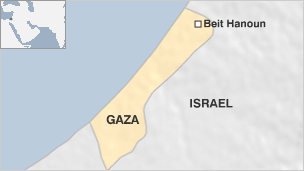
At least three Palestinians have been killed by tank fire near the border between Israel and the Gaza Strip, reports say.
Medical staff and witnesses said Israel fired shots across the border near the town of Beit Hanoun in Gaza.
One report said the two of those killed were a 91-year-old man and his 33-year-old grandson.
Militants in the Hamas-run Gaza Strip earlier fired a rocket into Israel but no casualties or damage were reported.
Adham Abu Salima, a spokesman for medical services in Gaza, told AFP news agency that the 91-year-old victim had been a caretaker at a farm.
His grandson died shortly afterwards from his wounds, he said.
The identity of the third victim was not yet clear.
Israeli army radio described the people killed as "terrorists" and said that at least one of them was armed.
The BBC's Jon Donnison in Ramallah says there has been an increase in rocket fire from Gaza in the past week, although it is nearly always ineffectual.
One Thai farm worker in Israel has been killed by rocket fire from Gaza in the past 18 months while scores of Palestinians in Gaza have been killed over the same period.
The increase in rocket fire comes as the US is trying to relaunch peace talks between Israelis and Palestinians.
Hamas is rejecting those talks.
Saturday, September 11, 2010
Steelworkers Accuse China of Unfair Trade Practices in Clean Technologies
By JOEL KIRKLAND of ClimateWire
Published: September 10, 2010
The largest American industrial union is accusing China of using unfair trade practices to create jobs in its clean energy technology sector and get a permanent edge on U.S. manufacturers.
The United Steelworkers yesterday filed a 5,000-page complaint with the U.S. Trade Representative that asserts China aims to control the global clean energy market at the expense of U.S. jobs. China's tactics for accelerating green technology development and securing big shares of the wind turbine and solar panel manufacturing businesses breach World Trade Organization rules, according to the union.
"This case draws a line in the sand," said union president Leo Gerard. "The petition presents comprehensive facts and data regarding China's illegal acts under international trade rules."
Gerard criticized U.S. trade officials for engaging in "unending diplomatic niceties" and photo-ops, instead of serious trade negotiations with China. "We're hemorrhaging jobs, seeing our bilateral trade deficit skyrocket and jeopardizing our future."
The state of U.S.-China trade relations has been a constant sore spot for groups that represent American workers. Increasingly, clean energy technology has been on their radar as China has made the development of that sector a national goal, and as concern mounts about U.S. job losses in a global market reliant on lower-cost Chinese manufacturers.
More broadly, the Bush and Obama administrations have come under fire for not aggressively challenging China's practice of intervening in currency markets to dampen the price of Chinese goods sold in foreign markets.
China recently surpassed Japan to become the second-largest economy in the world. That has happened as China has become the major global power player in renewable energy, producing about half of the equipment used in building solar panels and wind turbines. China and its companies, heavily subsidized by their government, invested more than $30 billion in 2009 to produce energy technology designed to lower carbon dioxide emissions tied to global warming.
The United States spends about half of that, despite support through U.S. government loans and grants meant to boost fledgling energy technology companies competing for a share of a U.S. market dominated by lower-cost conventional fuels such as coal.
Union lawsuit forces Obama's hand
By filing a complaint at the office of the chief U.S. trade negotiator, which has 45 days to decide whether it will open a formal investigation, the steelworkers union forces the Obama administration to respond just weeks before a midterm congressional election that promises to focus on the U.S. economy.
"I'd be shocked if they said there's nothing to look into. It allows them to kick the can down the road past the election," said Tim Keeler, counsel at the law firm Mayer Brown and former USTR chief of staff under the Bush administration.
"But what do they do then?" he added. "If all of a sudden you have formal trade fights between the U.S. and China, how does that affect U.S. and China bilateral and multilateral climate talks and trade negotiations?"
Trade officials under the Bush and Obama administrations have advocated for WTO members to consider lowering tariffs on environmental products. A U.S.-China imbroglio over China's trade practices could jeopardize progress on that issue.
Keeler said, to some degree, these types of trade disputes will be increasingly normal. "As the global market for clean technology grows, the trade fights associated with it will grow also," he said.
Still, he and others responding to questions about the filing yesterday said this puts the administration in a difficult position. Top Obama administration officials have said China is doing the right thing by investing in cleaner energy sources.
From the perspective of United Nations-led climate negotiations, China's financial commitments could help smooth the way during future talks. In addition, the expansion of China's manufacturing capacity has driven down the costs of producing wind and solar power globally.
A clash between environmental and technology policies?
"At some point we'll have to answer the question: Is there a clash between our environmental goals and our goal of having a robust clean technology manufacturing sector?" Keeler said.
The union's petition asserts primarily that China is in violation of a number of WTO rules. The WTO prohibits export subsidies that give domestic companies an advantage when they sell into the global market; it also restricts tariffs and subsidies that could thwart foreign competition.
China produces most of the world's supply of rare earth minerals that serve as critical raw materials in the manufacturing of wind turbines, solar panels and advanced batteries. In its petition, the union asserts China restricts exports of these minerals through export quotas, taxes and a complicated licensing process.
The WTO prohibits export restrictions on these minerals, and the U.S. and European countries are already pursuing a separate case against China tied to the trade of the rare earth minerals. The union asserts that China's alleged export restrictions increase prices for companies outside of China and create an incentive to shift U.S. manufacturing to China to gain access to the minerals supply.
The union's complaint also asserts China subsidizes companies based on export performance or on the use of Chinese-made goods in the manufacturing process. It notes that one program, called "Ride the Wind," grants access to loan benefits and connections to the power grid if a wind power project can show it uses Chinese-made equipment. Foreign companies that operate in China also get preferential treatment if they use Chinese-built products, according to the petition.
To Joanna Lewis, a China expert at Georgetown University, China isn't simply dumping wind and solar equipment onto the global markets, but also increasing its domestic market. "China was the largest wind energy market last year," she said. "It's not just that China is manufacturing these for export, but actually using it themselves."
Technology transfer and 'local content'
The complaint also asserts China rigs bidding processes for wind power projects by forcing consideration of "local content" in the project. Much of this is done through power purchase agreements with local governments, which the union asserts don't fall under a WTO exemption allowing "local content" discrimination for government procurement.
The U.S. Congress passed legislation in 2009 that included a "Buy America" provision for government-procured projects.
There is also the heated issue of technology transfer, which U.S. companies often agree to voluntarily as a way of entering the Chinese market. The transfer of advanced Western technology is considered a critical issue for helping developing countries such as China and India cut emissions and address global warming. But it's a highly contentious issue for U.S. companies afraid to introduce patented products into China for fear of losing their grip on the technology.
Georgetown's Lewis said a trade fight probably isn't the best approach for the United States. "There are plenty of areas that the U.S. has a comparative advantage over China, especially in advanced technologies.
"Our strength is never going to be low-cost manufacturing," she said. "There are plenty of areas where we are stronger and that we spend money on."
Adele Morris, an energy economist at the Brookings Institution, agreed that U.S. manufacturing -- be it green technologies or widgets or toilets -- isn't well-positioned to compete with China, and pursuing trade sanctions might not be the best approach to creating U.S. jobs.
"It's hard to see why clean energy should have a substantially different pattern of trade than the rest of the manufacturing sector," she said.
For example, she said, for a renewable energy standard to be in the interest of American consumers, the equipment and technology need to be affordable.
"In the interest of the environment, that's a good thing. We want the technologies to be cheap," Morris said. "So that's trouble for American manufacturers."
Copyright 2010 E&E Publishing. All Rights Reserved.
So American companies and their union workers can't compete with China workers and cry foul. Who's foul is it though? If you're in the corporate capitalist system competing with workers worldwide you will suffer the system's natural gravity where job workers who work for less and produce more will become the beneficiaries of "Free Market" capitalism. The environment be hanged when it comes to paychecks is basically what United Steelworkers are saying to us. Ironically, it was this very same union that our local environmentalists turned to to help them destroy our local timber industry jobs.
Published: September 10, 2010
The largest American industrial union is accusing China of using unfair trade practices to create jobs in its clean energy technology sector and get a permanent edge on U.S. manufacturers.
The United Steelworkers yesterday filed a 5,000-page complaint with the U.S. Trade Representative that asserts China aims to control the global clean energy market at the expense of U.S. jobs. China's tactics for accelerating green technology development and securing big shares of the wind turbine and solar panel manufacturing businesses breach World Trade Organization rules, according to the union.
"This case draws a line in the sand," said union president Leo Gerard. "The petition presents comprehensive facts and data regarding China's illegal acts under international trade rules."
Gerard criticized U.S. trade officials for engaging in "unending diplomatic niceties" and photo-ops, instead of serious trade negotiations with China. "We're hemorrhaging jobs, seeing our bilateral trade deficit skyrocket and jeopardizing our future."
The state of U.S.-China trade relations has been a constant sore spot for groups that represent American workers. Increasingly, clean energy technology has been on their radar as China has made the development of that sector a national goal, and as concern mounts about U.S. job losses in a global market reliant on lower-cost Chinese manufacturers.
More broadly, the Bush and Obama administrations have come under fire for not aggressively challenging China's practice of intervening in currency markets to dampen the price of Chinese goods sold in foreign markets.
China recently surpassed Japan to become the second-largest economy in the world. That has happened as China has become the major global power player in renewable energy, producing about half of the equipment used in building solar panels and wind turbines. China and its companies, heavily subsidized by their government, invested more than $30 billion in 2009 to produce energy technology designed to lower carbon dioxide emissions tied to global warming.
The United States spends about half of that, despite support through U.S. government loans and grants meant to boost fledgling energy technology companies competing for a share of a U.S. market dominated by lower-cost conventional fuels such as coal.
Union lawsuit forces Obama's hand
By filing a complaint at the office of the chief U.S. trade negotiator, which has 45 days to decide whether it will open a formal investigation, the steelworkers union forces the Obama administration to respond just weeks before a midterm congressional election that promises to focus on the U.S. economy.
"I'd be shocked if they said there's nothing to look into. It allows them to kick the can down the road past the election," said Tim Keeler, counsel at the law firm Mayer Brown and former USTR chief of staff under the Bush administration.
"But what do they do then?" he added. "If all of a sudden you have formal trade fights between the U.S. and China, how does that affect U.S. and China bilateral and multilateral climate talks and trade negotiations?"
Trade officials under the Bush and Obama administrations have advocated for WTO members to consider lowering tariffs on environmental products. A U.S.-China imbroglio over China's trade practices could jeopardize progress on that issue.
Keeler said, to some degree, these types of trade disputes will be increasingly normal. "As the global market for clean technology grows, the trade fights associated with it will grow also," he said.
Still, he and others responding to questions about the filing yesterday said this puts the administration in a difficult position. Top Obama administration officials have said China is doing the right thing by investing in cleaner energy sources.
From the perspective of United Nations-led climate negotiations, China's financial commitments could help smooth the way during future talks. In addition, the expansion of China's manufacturing capacity has driven down the costs of producing wind and solar power globally.
A clash between environmental and technology policies?
"At some point we'll have to answer the question: Is there a clash between our environmental goals and our goal of having a robust clean technology manufacturing sector?" Keeler said.
The union's petition asserts primarily that China is in violation of a number of WTO rules. The WTO prohibits export subsidies that give domestic companies an advantage when they sell into the global market; it also restricts tariffs and subsidies that could thwart foreign competition.
China produces most of the world's supply of rare earth minerals that serve as critical raw materials in the manufacturing of wind turbines, solar panels and advanced batteries. In its petition, the union asserts China restricts exports of these minerals through export quotas, taxes and a complicated licensing process.
The WTO prohibits export restrictions on these minerals, and the U.S. and European countries are already pursuing a separate case against China tied to the trade of the rare earth minerals. The union asserts that China's alleged export restrictions increase prices for companies outside of China and create an incentive to shift U.S. manufacturing to China to gain access to the minerals supply.
The union's complaint also asserts China subsidizes companies based on export performance or on the use of Chinese-made goods in the manufacturing process. It notes that one program, called "Ride the Wind," grants access to loan benefits and connections to the power grid if a wind power project can show it uses Chinese-made equipment. Foreign companies that operate in China also get preferential treatment if they use Chinese-built products, according to the petition.
To Joanna Lewis, a China expert at Georgetown University, China isn't simply dumping wind and solar equipment onto the global markets, but also increasing its domestic market. "China was the largest wind energy market last year," she said. "It's not just that China is manufacturing these for export, but actually using it themselves."
Technology transfer and 'local content'
The complaint also asserts China rigs bidding processes for wind power projects by forcing consideration of "local content" in the project. Much of this is done through power purchase agreements with local governments, which the union asserts don't fall under a WTO exemption allowing "local content" discrimination for government procurement.
The U.S. Congress passed legislation in 2009 that included a "Buy America" provision for government-procured projects.
There is also the heated issue of technology transfer, which U.S. companies often agree to voluntarily as a way of entering the Chinese market. The transfer of advanced Western technology is considered a critical issue for helping developing countries such as China and India cut emissions and address global warming. But it's a highly contentious issue for U.S. companies afraid to introduce patented products into China for fear of losing their grip on the technology.
Georgetown's Lewis said a trade fight probably isn't the best approach for the United States. "There are plenty of areas that the U.S. has a comparative advantage over China, especially in advanced technologies.
"Our strength is never going to be low-cost manufacturing," she said. "There are plenty of areas where we are stronger and that we spend money on."
Adele Morris, an energy economist at the Brookings Institution, agreed that U.S. manufacturing -- be it green technologies or widgets or toilets -- isn't well-positioned to compete with China, and pursuing trade sanctions might not be the best approach to creating U.S. jobs.
"It's hard to see why clean energy should have a substantially different pattern of trade than the rest of the manufacturing sector," she said.
For example, she said, for a renewable energy standard to be in the interest of American consumers, the equipment and technology need to be affordable.
"In the interest of the environment, that's a good thing. We want the technologies to be cheap," Morris said. "So that's trouble for American manufacturers."
Copyright 2010 E&E Publishing. All Rights Reserved.
So American companies and their union workers can't compete with China workers and cry foul. Who's foul is it though? If you're in the corporate capitalist system competing with workers worldwide you will suffer the system's natural gravity where job workers who work for less and produce more will become the beneficiaries of "Free Market" capitalism. The environment be hanged when it comes to paychecks is basically what United Steelworkers are saying to us. Ironically, it was this very same union that our local environmentalists turned to to help them destroy our local timber industry jobs.
Tuesday, September 07, 2010
US Jewish artists back Israeli counterparts' Ariel protest
By ASSOCIATED PRESS
09/06/2010 15:59
Vanessa Redgrave, Cynthia Nixon of "Sex and the City," playwright Tony Kushner among signatories of Jewish Voice for Peace petition.
Talkbacks (46)
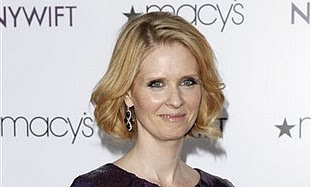
More than 150 film and theater artists have signed a letter of support for Israeli actors who refused to perform in the West Bank city of Ariel, a dovish US Jewish group said Monday.
The names on the letter include Oscar-winning actress Vanessa Redgrave, Cynthia Nixon of "Sex and the City" and playwright Tony Kushner. It was organized by the Jewish Voice for Peace.
A group of actors sparked a vocal debate in Israel last month when they said they would refuse to perform at a new theater in Ariel, in protest of Israel's "occupation" of the West Bank.
The actors' boycott drew support from a group of 150 Israeli academics and dozens of authors, including well-known writers Amos Oz and David Grossman.
09/06/2010 15:59
Vanessa Redgrave, Cynthia Nixon of "Sex and the City," playwright Tony Kushner among signatories of Jewish Voice for Peace petition.
Talkbacks (46)
More than 150 film and theater artists have signed a letter of support for Israeli actors who refused to perform in the West Bank city of Ariel, a dovish US Jewish group said Monday.
The names on the letter include Oscar-winning actress Vanessa Redgrave, Cynthia Nixon of "Sex and the City" and playwright Tony Kushner. It was organized by the Jewish Voice for Peace.
A group of actors sparked a vocal debate in Israel last month when they said they would refuse to perform at a new theater in Ariel, in protest of Israel's "occupation" of the West Bank.
The actors' boycott drew support from a group of 150 Israeli academics and dozens of authors, including well-known writers Amos Oz and David Grossman.
Monday, September 06, 2010
Lawyer says Iranian woman could be stoned soon
By NASSER KARIMI (AP) – 46 minutes ago
TEHRAN, Iran — The lawyer for an Iranian woman sentenced to be stoned on an adultery conviction says he and her children are worried the delayed execution could be carried out soon.
Javid Houtan Kian says a moratorium on death sentences for Ramadan is running out with the conclusion this week of the Muslim holy month.
The lawyer said Monday that Sakineh Mohammadi Ashtiani's stoning sentence could happen "any moment."
The sentence was put on hold in July after an international outcry and it is now being reviewed by Iran's supreme court.
Ashtiani was convicted in 2006 of having an "illicit relationship" with two men after the murder of her husband and was sentenced to 99 lashes. Later that year, she was also convicted of adultery and sentenced to be stoned.
THIS IS A BREAKING NEWS UPDATE. Check back soon for further information. AP's earlier story is below.
TEHRAN, Iran (AP) — An Iranian woman who was sentenced to death by stoning for adultery is now facing a new punishment of 99 lashes because a British newspaper ran a picture of an unveiled woman mistakenly identified as her, the woman's son said Monday.
There was no official confirmation of the new sentence. The son, Sajjad Qaderzadeh, 22, said he did not know whether the new lashing sentence had been carried out yet, but heard about it from a prisoner who had recently left the Tabriz prison where his mother is being held.
The lawyer who once represented Sakineh Mohammadi Ashtiani in Iran said from Paris that the situation was not clear.
"Publishing the photo provided a judge an excuse to sentence my poor mother to 99 lashes on the charge of taking a picture unveiled," Qaderzadeh told The Associated Press.
The Times of London said in its Monday edition it had apologized for the photo, but added that the new sentence "is simply a pretext."
"The regime's purpose is to make Ms. Ashtiani suffer for an international campaign to save her that has exposed so much iniquity," said the piece.
Ashtiani was convicted in 2006 of having an "illicit relationship" with two men after the death of her husband a year earlier and was sentenced by a court back then to 99 lashes. Later that year, she was also convicted of adultery and sentenced to be stoned to death, even though she retracted a confession that she claims was made under duress.
Iran suspended that sentence in July, but now says she has been convicted of involvement in her husband's killing and she could still be executed by hanging.
Her former lawyer, Mohammad Mostafaei, said in a news conference in Paris that he said it was not at all certain if there really had been a new conviction and sentence over the photograph.
"I have contacted my former colleagues at the court who told me nothing was clear on this situation," he said following a news conference with French Foreign Minister Bernard Kouchner. "There isn't any punishment for this act in our law."
Kouchner called the sentence to death by stoning "the height of barbarism" and said her case has become a "personal cause," and he was "ready to do anything to save her. If I must go to Tehran to save her, I'll go to Tehran."
Ashtiani's two children remain in Iran and her son is a ticket seller for a bus company in the northern Iranian city of Tabriz. He said he and his younger sister Farideh, 18, have not seen their mother since early August.
"We have really missed her," he said. "We expect all influential bodies to help to save her."
The stoning sentence for Ashtiani has prompted international outcry over the past months with both Brazil and Italy asking Iran to show flexibility in the case.
The Vatican on Sunday raised the possibility of using behind-the-scenes diplomacy to try to save her life as well.
Associated Press Writers Jenny Barchfield in Paris and Jill Lawless in London contributed to this report.
Copyright © 2010 The Associated Press. All rights reserved.
TEHRAN, Iran — The lawyer for an Iranian woman sentenced to be stoned on an adultery conviction says he and her children are worried the delayed execution could be carried out soon.
Javid Houtan Kian says a moratorium on death sentences for Ramadan is running out with the conclusion this week of the Muslim holy month.
The lawyer said Monday that Sakineh Mohammadi Ashtiani's stoning sentence could happen "any moment."
The sentence was put on hold in July after an international outcry and it is now being reviewed by Iran's supreme court.
Ashtiani was convicted in 2006 of having an "illicit relationship" with two men after the murder of her husband and was sentenced to 99 lashes. Later that year, she was also convicted of adultery and sentenced to be stoned.
THIS IS A BREAKING NEWS UPDATE. Check back soon for further information. AP's earlier story is below.
TEHRAN, Iran (AP) — An Iranian woman who was sentenced to death by stoning for adultery is now facing a new punishment of 99 lashes because a British newspaper ran a picture of an unveiled woman mistakenly identified as her, the woman's son said Monday.
There was no official confirmation of the new sentence. The son, Sajjad Qaderzadeh, 22, said he did not know whether the new lashing sentence had been carried out yet, but heard about it from a prisoner who had recently left the Tabriz prison where his mother is being held.
The lawyer who once represented Sakineh Mohammadi Ashtiani in Iran said from Paris that the situation was not clear.
"Publishing the photo provided a judge an excuse to sentence my poor mother to 99 lashes on the charge of taking a picture unveiled," Qaderzadeh told The Associated Press.
The Times of London said in its Monday edition it had apologized for the photo, but added that the new sentence "is simply a pretext."
"The regime's purpose is to make Ms. Ashtiani suffer for an international campaign to save her that has exposed so much iniquity," said the piece.
Ashtiani was convicted in 2006 of having an "illicit relationship" with two men after the death of her husband a year earlier and was sentenced by a court back then to 99 lashes. Later that year, she was also convicted of adultery and sentenced to be stoned to death, even though she retracted a confession that she claims was made under duress.
Iran suspended that sentence in July, but now says she has been convicted of involvement in her husband's killing and she could still be executed by hanging.
Her former lawyer, Mohammad Mostafaei, said in a news conference in Paris that he said it was not at all certain if there really had been a new conviction and sentence over the photograph.
"I have contacted my former colleagues at the court who told me nothing was clear on this situation," he said following a news conference with French Foreign Minister Bernard Kouchner. "There isn't any punishment for this act in our law."
Kouchner called the sentence to death by stoning "the height of barbarism" and said her case has become a "personal cause," and he was "ready to do anything to save her. If I must go to Tehran to save her, I'll go to Tehran."
Ashtiani's two children remain in Iran and her son is a ticket seller for a bus company in the northern Iranian city of Tabriz. He said he and his younger sister Farideh, 18, have not seen their mother since early August.
"We have really missed her," he said. "We expect all influential bodies to help to save her."
The stoning sentence for Ashtiani has prompted international outcry over the past months with both Brazil and Italy asking Iran to show flexibility in the case.
The Vatican on Sunday raised the possibility of using behind-the-scenes diplomacy to try to save her life as well.
Associated Press Writers Jenny Barchfield in Paris and Jill Lawless in London contributed to this report.
Copyright © 2010 The Associated Press. All rights reserved.
Tuesday, August 31, 2010
Lifting Israeli Restrictions Would Grow Palestinian Economy
Lisa Schlein | Geneva
31 August 2010

Voice of America
Palestinians recycle cement at a factory that does not receive raw materials from Israel, east of Jebaliya, Gaza Strip (File)
A new study finds the Palestinian economy in 2009 improved slightly, but continued to perform well below its potential. The report says rehabilitation of the Palestinian economy requires a complete lifting of all Israeli restrictions in the West Bank and Gaza. The U.N. Conference on Trade and Development has issued its annual Report on Assistance to the Palestinian People.
The UNCTAD study estimates gross domestic product climbed by 6.8 percent in the occupied Palestinian territories in 2009 and the unemployment rate declined by 1.6 percent.
UNCTAD Coordinator of the Assistance to the Palestinian People Mahmoud Elkhafif says these cited statistics sound good on paper, but adds the reality is no cause for optimism.
"Over the last 10 years, the income per capita, or GDP per capita, is 30 percent below what the Palestinian, average Palestinian used to have 10 years ago. So, when we say 6.8 percent growth, that seems O.K., but when we see that there is a 30 percent decline in real GDP per capita, that is an alarming figure," said Elkhafif. "When we also see that 30 percent of the Palestinian in the West Bank and Gaza are unemployed, that is also alarming."
The report says the economic and humanitarian situation continues to worsen. It says poverty persists and food insecurity affects more than 60 percent of the population in Gaza and 25 percent of the population in the West Bank.
UNCTAD economists note the private-sector revival continues to be hampered by Israeli movement restrictions both within the Occupied Palestinian Territories and at border crossings.
It says the situation in Gaza is far worse than in the West Bank. It says the so-called "tunnel economy" and informal economy in Gaza has greatly expanded to compensate for the collapse of the productive sector.
As a consequence, Elkhafif says, the Palestinian trade deficit worsened to 59 percent in 2009.
"But, what is more alarming is the extreme dependency on the Israeli economy. Three-quarters of the Palestinian trade is with Israel," Elkhafif said. "As a result ... the total Palestinian trade deficit with Israel was about $2.6 billion in 2009. This is about seven-percent higher than the $2.4 billion received by the Occupied Palestinian Territory from the International Community."
The report agrees fiscal reforms aimed at narrowing the public deficit can be important policy goals. But it warns they should not be pursued at the cost of increasing the poverty and misery of the Palestinian people.
The report says the Palestinian economy would improve substantially with the lifting of the Israeli blockade of Gaza and the closures in the West Bank. It says relaxing these barriers would produce 60,000-80,000 more jobs a year.
31 August 2010

Voice of America
Palestinians recycle cement at a factory that does not receive raw materials from Israel, east of Jebaliya, Gaza Strip (File)
A new study finds the Palestinian economy in 2009 improved slightly, but continued to perform well below its potential. The report says rehabilitation of the Palestinian economy requires a complete lifting of all Israeli restrictions in the West Bank and Gaza. The U.N. Conference on Trade and Development has issued its annual Report on Assistance to the Palestinian People.
The UNCTAD study estimates gross domestic product climbed by 6.8 percent in the occupied Palestinian territories in 2009 and the unemployment rate declined by 1.6 percent.
UNCTAD Coordinator of the Assistance to the Palestinian People Mahmoud Elkhafif says these cited statistics sound good on paper, but adds the reality is no cause for optimism.
"Over the last 10 years, the income per capita, or GDP per capita, is 30 percent below what the Palestinian, average Palestinian used to have 10 years ago. So, when we say 6.8 percent growth, that seems O.K., but when we see that there is a 30 percent decline in real GDP per capita, that is an alarming figure," said Elkhafif. "When we also see that 30 percent of the Palestinian in the West Bank and Gaza are unemployed, that is also alarming."
The report says the economic and humanitarian situation continues to worsen. It says poverty persists and food insecurity affects more than 60 percent of the population in Gaza and 25 percent of the population in the West Bank.
UNCTAD economists note the private-sector revival continues to be hampered by Israeli movement restrictions both within the Occupied Palestinian Territories and at border crossings.
It says the situation in Gaza is far worse than in the West Bank. It says the so-called "tunnel economy" and informal economy in Gaza has greatly expanded to compensate for the collapse of the productive sector.
As a consequence, Elkhafif says, the Palestinian trade deficit worsened to 59 percent in 2009.
"But, what is more alarming is the extreme dependency on the Israeli economy. Three-quarters of the Palestinian trade is with Israel," Elkhafif said. "As a result ... the total Palestinian trade deficit with Israel was about $2.6 billion in 2009. This is about seven-percent higher than the $2.4 billion received by the Occupied Palestinian Territory from the International Community."
The report agrees fiscal reforms aimed at narrowing the public deficit can be important policy goals. But it warns they should not be pursued at the cost of increasing the poverty and misery of the Palestinian people.
The report says the Palestinian economy would improve substantially with the lifting of the Israeli blockade of Gaza and the closures in the West Bank. It says relaxing these barriers would produce 60,000-80,000 more jobs a year.
Sunday, August 29, 2010
Erekat: Israeli religious figure urging genocide of Palestinians
Saeb Erekat slams remarks by Shas spiritual leader rabbi Ovadia Yosef, who said earlier Palestinians should perish.
By Haaretz Service, The Associated Press and Jack Khoury

Chief Palestinian negotiator Saeb Erekat
Photo by: Dan Keinan
Chief Palestinian negotiator Saeb Erekat on Sunday slammed remarks by the spiritual leader of Israel's leading ultra-Orthodox party, who said the Palestinians should "perish", saying that it was paramount to incitement to genocide.
Erekat called on the Israeli government to denounce the remarks by Israel's former chief rabbi Ovadia Yosef, and to take action against racist remarks by other elected officials. He also criticized Israel for allowing the incident to pass without condemnation.
Yosef had said during his weekly Shabbat sermon that the Palestinians, namely Palestinian President Mahmoud Abbas, should perish from the world. Yosef, a founder of the Shas Party, also described Palestinians as evil, bitter enemies of Israel.
"All these evil people should perish from this world ... God should strike them with a plague, them and these Palestinians," Yosef had said.
The 89-year-old is a respected religious scholar but is also known for vitriolic comments about Arabs, secular Jews, liberals, women and gays, among others.
"Is this how the Israeli government prepares its public for a peace agreement?" Erekat said, days before Israeli and Palestinian leaders were scheduled to meet in Washington for the launch of renewed direct peace negotiations.
"While the PLO is ready to resume negotiations in seriousness and good faith, a member of the Israeli government is calling for our destruction," Erekat said. "It is an insult to all our efforts to advance the negotiations process."
Erekat called on Israel "do more about peace and stop spreading hatred" and said Yosef's comments could be placed within the larger context of Israel's "policy against a Palestinian state" such as settlement expansion, home demolitions, among other things.
MK Jamal Zahalka, chair of the Balad Knesset faction, sent a letter to the Attorney General Yehuda Weinstein, demanding that Shas spiritual leader Rabbi Ovadia Yosef be investigated and tried for racist incitement and incitement to murder.
"Yosef's comments are especially dangerous because he keep repeating himself again and again, so he must be prosecuted to the fullest extent of the law," MK Zahalka said.
According to Zahalka, Yosef is not a minor public figure, but a spiritual leader than has hundreds of thousands that follow his religious edicts, and his comments can be understood as permission to kill Palestinians. Zahalka added, "If, heaven forbid, a Muslim spiritual leader were to make anti-Jewish comments of this sort, he would be arrested immediately."
MK Ahmed Tibi, chair of the United Arab List-Ta'al Knesset faction, also responded to Yosef's comments, saying that the rabbi "has long since turned into the biggest blasphemer, the evilest purveyor of hatred and killing, which are contrary to all religions." MK Tibi called upon Yosef to reconsider his call for all evildoers to die, "because without realizing it, he is calling for his own death."
Netanyahu's office did not immediately respond to a request for comment.
Israel has accused the Palestinian government of incitement against the Jewish state, including by naming streets after Palestinian militants.
The Palestinian Authority has dismissed such allegations, though U.S. President Barack Obama told Abbas earlier this year he needs to do more to halt incitement against Israel.
By Haaretz Service, The Associated Press and Jack Khoury

Chief Palestinian negotiator Saeb Erekat
Photo by: Dan Keinan
Chief Palestinian negotiator Saeb Erekat on Sunday slammed remarks by the spiritual leader of Israel's leading ultra-Orthodox party, who said the Palestinians should "perish", saying that it was paramount to incitement to genocide.
Erekat called on the Israeli government to denounce the remarks by Israel's former chief rabbi Ovadia Yosef, and to take action against racist remarks by other elected officials. He also criticized Israel for allowing the incident to pass without condemnation.
Yosef had said during his weekly Shabbat sermon that the Palestinians, namely Palestinian President Mahmoud Abbas, should perish from the world. Yosef, a founder of the Shas Party, also described Palestinians as evil, bitter enemies of Israel.
"All these evil people should perish from this world ... God should strike them with a plague, them and these Palestinians," Yosef had said.
The 89-year-old is a respected religious scholar but is also known for vitriolic comments about Arabs, secular Jews, liberals, women and gays, among others.
"Is this how the Israeli government prepares its public for a peace agreement?" Erekat said, days before Israeli and Palestinian leaders were scheduled to meet in Washington for the launch of renewed direct peace negotiations.
"While the PLO is ready to resume negotiations in seriousness and good faith, a member of the Israeli government is calling for our destruction," Erekat said. "It is an insult to all our efforts to advance the negotiations process."
Erekat called on Israel "do more about peace and stop spreading hatred" and said Yosef's comments could be placed within the larger context of Israel's "policy against a Palestinian state" such as settlement expansion, home demolitions, among other things.
MK Jamal Zahalka, chair of the Balad Knesset faction, sent a letter to the Attorney General Yehuda Weinstein, demanding that Shas spiritual leader Rabbi Ovadia Yosef be investigated and tried for racist incitement and incitement to murder.
"Yosef's comments are especially dangerous because he keep repeating himself again and again, so he must be prosecuted to the fullest extent of the law," MK Zahalka said.
According to Zahalka, Yosef is not a minor public figure, but a spiritual leader than has hundreds of thousands that follow his religious edicts, and his comments can be understood as permission to kill Palestinians. Zahalka added, "If, heaven forbid, a Muslim spiritual leader were to make anti-Jewish comments of this sort, he would be arrested immediately."
MK Ahmed Tibi, chair of the United Arab List-Ta'al Knesset faction, also responded to Yosef's comments, saying that the rabbi "has long since turned into the biggest blasphemer, the evilest purveyor of hatred and killing, which are contrary to all religions." MK Tibi called upon Yosef to reconsider his call for all evildoers to die, "because without realizing it, he is calling for his own death."
Netanyahu's office did not immediately respond to a request for comment.
Israel has accused the Palestinian government of incitement against the Jewish state, including by naming streets after Palestinian militants.
The Palestinian Authority has dismissed such allegations, though U.S. President Barack Obama told Abbas earlier this year he needs to do more to halt incitement against Israel.
Artists refuse to perform in settlement
By REBECCA ANNA STOIL
Jerusalem Post
08/29/2010 01:04
Livnat says boycotting "actors have divided Israeli society."
Culture and Sport Minister Limor Livnat (Likud) slammed dozens of performing artists over the weekend after they signed on to a letter saying they would refuse to perform at the new culture center in the West Bank city of Ariel.
MKs Carmel Shama (Likud) and Alex Miller (Israel Beiteinu) issued a joint request for an urgent recess hearing on the subject in the Knesset’s Education, Culture and Sport Committee.
On Friday, 36 prominent theater personalities sent a letter to the directors-general of Israeli theaters in which they said that they would boycott any event held in the Ariel facility, as working there would be “against their consciences.”
The writers, directors and actors wrote the letter in response to reports in Haaretz that a NIS 40 million cultural center was slated to open in Ariel (population about 17,000) in November.
The Cameri, Khan, Habima and Beersheba Theaters are scheduled to mount productions in the new facility.
Livnat, in response to the artists’ letter, issued a statement in which she called on the theater directors “to immediately address this crisis that has been created, in which actors and creators have decided to divide Israeli society.
“This creates a rift in society, and discriminates between audiences on the basis of the political opinions of the artists. Culture is a social bridge, and the political debate must be left outside of cultural and artistic life,” the minister continued.
She called on theater managers to maintain their performance schedules in Ariel and throughout Israel.
“Every citizen has the right to culture, anywhere they want.”
Miller and Shama said in their letter to Culture Committee chairman MK Zevulun Orlev (Habayit Hayehudi), “This is an infuriating and dangerous precedent that discriminates against innocent citizens based on their place of residence and prevents them from receiving cultural and artistic services despite being lawabiding taxpayers. This is a case of ugly political discrimination that must be rejected and uprooted.”
Miller and Shama requested the Knesset examine the possibility of denying government subsidies to “those who take part in this absurd initiative.”
Miller, who lives in Ariel, said the artists’ boycott constituted “collective punishment.”
“Ariel is an inseparable part of the State of Israel, the state that subsidizes and supports theaters and numerous artists,” the lawmakers wrote.
The managers of a number of prominent theaters, including Habima and the Cameri – perhaps the nation’s leading stages – have distanced themselves from the letter.
“We will respect our actors’ political views, but we will bring the best plays in Israeli theater to Ariel,” they wrote in a statement together with the heads of other leading theaters.
MK Ahmed Tibi (United Arab List) congratulated the artists for standing at the “front line in the struggle against the inequities, oppression and repression of the occupation.
“The decision by the theater managements to appear in Ariel is embarrassing, but is consistent with the fascism that has almost become mainstream in Israeli society,” Tibi said.
Jerusalem Post
08/29/2010 01:04
Livnat says boycotting "actors have divided Israeli society."
Culture and Sport Minister Limor Livnat (Likud) slammed dozens of performing artists over the weekend after they signed on to a letter saying they would refuse to perform at the new culture center in the West Bank city of Ariel.
MKs Carmel Shama (Likud) and Alex Miller (Israel Beiteinu) issued a joint request for an urgent recess hearing on the subject in the Knesset’s Education, Culture and Sport Committee.
On Friday, 36 prominent theater personalities sent a letter to the directors-general of Israeli theaters in which they said that they would boycott any event held in the Ariel facility, as working there would be “against their consciences.”
The writers, directors and actors wrote the letter in response to reports in Haaretz that a NIS 40 million cultural center was slated to open in Ariel (population about 17,000) in November.
The Cameri, Khan, Habima and Beersheba Theaters are scheduled to mount productions in the new facility.
Livnat, in response to the artists’ letter, issued a statement in which she called on the theater directors “to immediately address this crisis that has been created, in which actors and creators have decided to divide Israeli society.
“This creates a rift in society, and discriminates between audiences on the basis of the political opinions of the artists. Culture is a social bridge, and the political debate must be left outside of cultural and artistic life,” the minister continued.
She called on theater managers to maintain their performance schedules in Ariel and throughout Israel.
“Every citizen has the right to culture, anywhere they want.”
Miller and Shama said in their letter to Culture Committee chairman MK Zevulun Orlev (Habayit Hayehudi), “This is an infuriating and dangerous precedent that discriminates against innocent citizens based on their place of residence and prevents them from receiving cultural and artistic services despite being lawabiding taxpayers. This is a case of ugly political discrimination that must be rejected and uprooted.”
Miller and Shama requested the Knesset examine the possibility of denying government subsidies to “those who take part in this absurd initiative.”
Miller, who lives in Ariel, said the artists’ boycott constituted “collective punishment.”
“Ariel is an inseparable part of the State of Israel, the state that subsidizes and supports theaters and numerous artists,” the lawmakers wrote.
The managers of a number of prominent theaters, including Habima and the Cameri – perhaps the nation’s leading stages – have distanced themselves from the letter.
“We will respect our actors’ political views, but we will bring the best plays in Israeli theater to Ariel,” they wrote in a statement together with the heads of other leading theaters.
MK Ahmed Tibi (United Arab List) congratulated the artists for standing at the “front line in the struggle against the inequities, oppression and repression of the occupation.
“The decision by the theater managements to appear in Ariel is embarrassing, but is consistent with the fascism that has almost become mainstream in Israeli society,” Tibi said.
Friday, August 27, 2010
EU 'concerned' by conviction of anti-separation fence activist
By Natasha Mozgovaya
Haaretz.com
The European Union's top diplomat yesterday criticized Israel over the conviction of a leader of Palestinian protests against Israel's West Bank separation barrier, calling the activist a human rights defender.
In a strongly worded statement, Catherine Ashton said she was deeply concerned by the conviction of Abdullah Abu Rahmeh, an organizer of weekly marches from the West Bank Palestinian village of Bil'in to the barrier nearby.
Israel started taking a harder line against demonstrations in the West Bank late last year, arresting activists and keeping protesters from reaching the barrier. Abu Rahmeh, a 39-year-old schoolteacher, is among the most prominent of those detained in a string of arrests.
Jailed since December, he was convicted in a military court Tuesday of inciting protesters to attack Israeli soldiers and for participating in protests without a legal permit. The case has drawn international attention, and foreign observers and reporters attended the court session.
The EU views the route of the barrier as illegal and views Abu Rahmeh as a human rights defender committed to nonviolent protest, Ashton said.
Ashton suggested the conviction was intended to prevent him and other Palestinians from exercising their legitimate right to nonviolent protest against the separation barrier.
Ashton's statement drew a sharp rebuke from Foreign Ministry spokesman Yigal Palmor, who said Israeli law guarantees freedom to protest and that the EU diplomat's interference with a transparent legal procedure is highly improper.
The General Delegation of the Palestine Liberation Organization to the United States also condemned Abu Rahmeh's conviction "in the strongest possible terms."
Abu Rahmeh's lawyer, Gaby Lasky, said the charges could carry a prison sentence of several years. Sentencing is scheduled for next month, after which Abu Rahmeh will appeal the conviction, she added.
Lasky noted that Israel's Supreme Court has ordered the rerouting of the barrier at Bil'in. "They prosecute a person who organized protests against a fence that is itself illegal. This is an unfitting use of legal measures," she said.
The barrier, which Israel began building in the midst of a wave of attacks by suicide bombers from the West Bank, runs through the village's farmland. Palestinians view it as an attempt by Israel to seize land in the West Bank.
The Bil'in protests, attended by villagers as well as by Israeli and international activists, usually involve a mix of marching, chanting and throwing rocks at Israeli troops. One man from Bil'in and five people from the nearby village of Na'alin have been killed and hundreds of demonstrators have been injured by soldiers since the protests began in 2005.
Dozens of Israeli soldiers and police officers have also been injured.
Haaretz.com
The European Union's top diplomat yesterday criticized Israel over the conviction of a leader of Palestinian protests against Israel's West Bank separation barrier, calling the activist a human rights defender.
In a strongly worded statement, Catherine Ashton said she was deeply concerned by the conviction of Abdullah Abu Rahmeh, an organizer of weekly marches from the West Bank Palestinian village of Bil'in to the barrier nearby.
Israel started taking a harder line against demonstrations in the West Bank late last year, arresting activists and keeping protesters from reaching the barrier. Abu Rahmeh, a 39-year-old schoolteacher, is among the most prominent of those detained in a string of arrests.
Jailed since December, he was convicted in a military court Tuesday of inciting protesters to attack Israeli soldiers and for participating in protests without a legal permit. The case has drawn international attention, and foreign observers and reporters attended the court session.
The EU views the route of the barrier as illegal and views Abu Rahmeh as a human rights defender committed to nonviolent protest, Ashton said.
Ashton suggested the conviction was intended to prevent him and other Palestinians from exercising their legitimate right to nonviolent protest against the separation barrier.
Ashton's statement drew a sharp rebuke from Foreign Ministry spokesman Yigal Palmor, who said Israeli law guarantees freedom to protest and that the EU diplomat's interference with a transparent legal procedure is highly improper.
The General Delegation of the Palestine Liberation Organization to the United States also condemned Abu Rahmeh's conviction "in the strongest possible terms."
Abu Rahmeh's lawyer, Gaby Lasky, said the charges could carry a prison sentence of several years. Sentencing is scheduled for next month, after which Abu Rahmeh will appeal the conviction, she added.
Lasky noted that Israel's Supreme Court has ordered the rerouting of the barrier at Bil'in. "They prosecute a person who organized protests against a fence that is itself illegal. This is an unfitting use of legal measures," she said.
The barrier, which Israel began building in the midst of a wave of attacks by suicide bombers from the West Bank, runs through the village's farmland. Palestinians view it as an attempt by Israel to seize land in the West Bank.
The Bil'in protests, attended by villagers as well as by Israeli and international activists, usually involve a mix of marching, chanting and throwing rocks at Israeli troops. One man from Bil'in and five people from the nearby village of Na'alin have been killed and hundreds of demonstrators have been injured by soldiers since the protests began in 2005.
Dozens of Israeli soldiers and police officers have also been injured.
Thursday, August 26, 2010
The Politics of economics: The boycott on Israel is expanding
Daniel Bettini, Navit Zumer and Ofer Petersburg, Yediot, August 25 2010
The decision made on Monday by the Norwegian oil fund to divest from Africa Israel and Danya Cebus on the grounds that they are involved in illegal construction in the territories, is only the latest in a long series of decisions by governmental and private companies in Europe to boycott Israeli companies for political reasons.
In most cases, the argument is that the products were manufactured over the Green Line, and are therefore in the “occupied territories.” At times, this refers to a political protest against Israel’s policy towards the Palestinians, for example, in response to the flotilla events. One thing is not in question: In recent months, there has been an escalation in the boycott of Israeli brands for political reasons.
“Since the Palestinians announced a boycott on products from the territories, I have had a 40% drop in production in recent months,” said yesterday Avi Ben-Zvi, owner of Plastco, a glass plant in Ariel, “exports to Europe have completely stopped, and traders in the territories have stopped working with us. The damage is huge.”
Ariel Mayor Ron Nahman said that this was causing great damage to the factories in the area: “Large-scale governmental action should be taken in order to go to the boycotting countries and threaten that they will not be partners to the peace process.”
Norway’s decision from Monday was preceded in March 2010 by the decision of a large Swedish pension fund to boycott Elbit Systems, an Israeli company, due to its part in building the separation fence. The fund announced that it had sold its holdings in Elbit following a recommendation of the fund’s ethics committee not to invest in shares of companies that are involved in violating international conventions.
Elbit also suffered from a boycott beforehand: the Government Pension Fund of Norway announced last September that it would stop investing in Elbit due to its part in building the fence. At the end of last May, the Deutsche Bank announced that it had sold all of its shares in Elbit, apparently after heavy pressure that was applied to the bank’s management by representatives of anti-Israeli and pro-Palestinian organizations.
Two years ago, the Swedish giant Assa Abloy, owner of the Israeli Multi-Lock, apologized for operating its factory in the Barkan Industrial Zone, Beyond the Green Line. The company promised to move the factory “into Israel” following pressure from a Swedish human rights organization.
Chairman of the Manufacturers Association of Israel Shraga Brosh said yesterday that “from time to time, various bodies, mainly Scandinavian, boycott one company or another from Israel. In the end, these are pinpointed events that do not affect trade with Israel as a whole.”
Soda Club has also been hit by the boycott: After receiving threats by pro-Palestinian groups, the Paris Municipality was forced to deny that the Israeli company was participating in a large fair promoting the us of tap water.
In July 2009 it became known that the French transport company Veolia, operator of the the Jerusalem light rail, decided to sell its hares in the project. Veolia did not cite the reason for the sale, but a hint may be found in the agreement of a French court a few months earlier to hear a petition against Veolia for building parts of the line inside East Jerusalem, in order to connect Jewish neighborhoods in the eastern part of the city with the west.
Africa Israel stated: “Africa Israel and its subsidiaries have not been involved for quite some time in real estate development or residential construction in the West Bank. Therefore, the allegations are groundless.”
The decision made on Monday by the Norwegian oil fund to divest from Africa Israel and Danya Cebus on the grounds that they are involved in illegal construction in the territories, is only the latest in a long series of decisions by governmental and private companies in Europe to boycott Israeli companies for political reasons.
In most cases, the argument is that the products were manufactured over the Green Line, and are therefore in the “occupied territories.” At times, this refers to a political protest against Israel’s policy towards the Palestinians, for example, in response to the flotilla events. One thing is not in question: In recent months, there has been an escalation in the boycott of Israeli brands for political reasons.
“Since the Palestinians announced a boycott on products from the territories, I have had a 40% drop in production in recent months,” said yesterday Avi Ben-Zvi, owner of Plastco, a glass plant in Ariel, “exports to Europe have completely stopped, and traders in the territories have stopped working with us. The damage is huge.”
Ariel Mayor Ron Nahman said that this was causing great damage to the factories in the area: “Large-scale governmental action should be taken in order to go to the boycotting countries and threaten that they will not be partners to the peace process.”
Norway’s decision from Monday was preceded in March 2010 by the decision of a large Swedish pension fund to boycott Elbit Systems, an Israeli company, due to its part in building the separation fence. The fund announced that it had sold its holdings in Elbit following a recommendation of the fund’s ethics committee not to invest in shares of companies that are involved in violating international conventions.
Elbit also suffered from a boycott beforehand: the Government Pension Fund of Norway announced last September that it would stop investing in Elbit due to its part in building the fence. At the end of last May, the Deutsche Bank announced that it had sold all of its shares in Elbit, apparently after heavy pressure that was applied to the bank’s management by representatives of anti-Israeli and pro-Palestinian organizations.
Two years ago, the Swedish giant Assa Abloy, owner of the Israeli Multi-Lock, apologized for operating its factory in the Barkan Industrial Zone, Beyond the Green Line. The company promised to move the factory “into Israel” following pressure from a Swedish human rights organization.
Chairman of the Manufacturers Association of Israel Shraga Brosh said yesterday that “from time to time, various bodies, mainly Scandinavian, boycott one company or another from Israel. In the end, these are pinpointed events that do not affect trade with Israel as a whole.”
Soda Club has also been hit by the boycott: After receiving threats by pro-Palestinian groups, the Paris Municipality was forced to deny that the Israeli company was participating in a large fair promoting the us of tap water.
In July 2009 it became known that the French transport company Veolia, operator of the the Jerusalem light rail, decided to sell its hares in the project. Veolia did not cite the reason for the sale, but a hint may be found in the agreement of a French court a few months earlier to hear a petition against Veolia for building parts of the line inside East Jerusalem, in order to connect Jewish neighborhoods in the eastern part of the city with the west.
Africa Israel stated: “Africa Israel and its subsidiaries have not been involved for quite some time in real estate development or residential construction in the West Bank. Therefore, the allegations are groundless.”
Tuesday, August 24, 2010
U.S. warns Israel: Refrain from harming peace talks
Haaretz.com
Published 18:21 24.08.10
Latest update 18:21 24.08.10
Senior American official says U.S. views Israeli construction in West Bank settlements as illegitimate.
By Barak Ravid
 U.S. envoy George Mitchell meets with Prime Minister Benjamin Netanyahu on April 23, 2010 in Jerusalem.
Photo by: AP
The Obama administration expects Israel to refrain from making any move that could potentially damage peace talks with the Palestinians once they begin, United States Middle East envoy George Mitchell has told Prime Minister Benjamin Netanyahu.
In recent days, Palestinian President Mahmoud Abbas has made clear that if Israel renews building in West Bank settlements, after a 10-month freeze on settlement construction on September 27, the Palestinian Authority will abandon the direct peace talks.
Benjamin Netanyahu and George Mitchell, AP, April 23, 2010.
U.S. envoy George Mitchell meets with Prime Minister Benjamin Netanyahu on April 23, 2010 in Jerusalem.
Photo by: AP
A senior American official well versed in the latest contacts between the U.S. and Israeli administrations refused to say whether Mitchell's message explicitly mentioned the future of settlement building. The official said that the U.S. position on the settlements is already known and has not changed. He clarified by saying that the U.S. views Israeli settlement building as illegitimate.
The official added that the U.S. had made clear to both sides that once the negotiations begin, both sides are expected to make serious efforts to move the talks forward and to avoid taking steps that could potentially harm them. The U.S. will make every effort to ensure that the talks don't end once they have begun, the official said.
Direct peace negotiations are expected to begin on September 2 in Washington, but several things, including a schedule and daily agenda for the visit, have yet to be determined. Another important detail yet to be addressed is the format the negotiations will take once the Washington summit is over.
The agenda and schedule for the visit will be finalized this week, the senior American official said. He confirmed that there will be direct talks between to the two parties and that all issues will be on the negotiating table. But he made clear that the two sides must decide how to direct the negotiations and choose the order of the topics to be discussed. The official expects that the Palestinians will want to discuss settlement building while Israel will want to address other issues.
The official believes that the U.S. government, and Mitchell in particular, plan on being extremely active participants in the talks. U.S. President Barack Obama has invested a lot of time on this issue, the official said while stressing how important the talks were for Obama. He added that the president has put his credibility on the line by inviting everyone to the White House and is more invested in this issue than the previous U.S. government was.
Published 18:21 24.08.10
Latest update 18:21 24.08.10
Senior American official says U.S. views Israeli construction in West Bank settlements as illegitimate.
By Barak Ravid
 U.S. envoy George Mitchell meets with Prime Minister Benjamin Netanyahu on April 23, 2010 in Jerusalem.
Photo by: AP
The Obama administration expects Israel to refrain from making any move that could potentially damage peace talks with the Palestinians once they begin, United States Middle East envoy George Mitchell has told Prime Minister Benjamin Netanyahu.
In recent days, Palestinian President Mahmoud Abbas has made clear that if Israel renews building in West Bank settlements, after a 10-month freeze on settlement construction on September 27, the Palestinian Authority will abandon the direct peace talks.
Benjamin Netanyahu and George Mitchell, AP, April 23, 2010.
U.S. envoy George Mitchell meets with Prime Minister Benjamin Netanyahu on April 23, 2010 in Jerusalem.
Photo by: AP
A senior American official well versed in the latest contacts between the U.S. and Israeli administrations refused to say whether Mitchell's message explicitly mentioned the future of settlement building. The official said that the U.S. position on the settlements is already known and has not changed. He clarified by saying that the U.S. views Israeli settlement building as illegitimate.
The official added that the U.S. had made clear to both sides that once the negotiations begin, both sides are expected to make serious efforts to move the talks forward and to avoid taking steps that could potentially harm them. The U.S. will make every effort to ensure that the talks don't end once they have begun, the official said.
Direct peace negotiations are expected to begin on September 2 in Washington, but several things, including a schedule and daily agenda for the visit, have yet to be determined. Another important detail yet to be addressed is the format the negotiations will take once the Washington summit is over.
The agenda and schedule for the visit will be finalized this week, the senior American official said. He confirmed that there will be direct talks between to the two parties and that all issues will be on the negotiating table. But he made clear that the two sides must decide how to direct the negotiations and choose the order of the topics to be discussed. The official expects that the Palestinians will want to discuss settlement building while Israel will want to address other issues.
The official believes that the U.S. government, and Mitchell in particular, plan on being extremely active participants in the talks. U.S. President Barack Obama has invested a lot of time on this issue, the official said while stressing how important the talks were for Obama. He added that the president has put his credibility on the line by inviting everyone to the White House and is more invested in this issue than the previous U.S. government was.
Saturday, August 21, 2010
From: Mazin Qumsiyeh journal: "Viva, Viva Negotiations!"
Returning from the Friday demonstration in Al-Walaja in unbearable heat (new
video at http://www.youtube.com/watch?v=8pftDUGV9RY) we note that the talks
about the talks about the peace talks are to resume in Washington September
2nd. The Obama administration decided not to spend any political capital
challenging the Israeli lobby. In fact the US politicians want to blunt
Republican criticism ahead of midterm elections by chalking out a diplomatic
“success” in form if not in substance. Direct talks will lead to more
erosion of Palestinian rights especially when conducted in Israeli-occupied
Washington between Abbas whose mandate as president of the Palestinian
bantustan in the West Bank expired last January and Mr. Netanyahu, a known
terrorist and war criminal leading the most extreme right-wing government in
the history of the apartheid state of Israel. I believe most Palestinians
(Abbas included) are neither optimistic nor pleased about this development.
But few of us believe it was necessary for Abbas to yield yet again. Most
(including large segments of Fatah) believe it is a huge mistake that just
set back the real cause for peace. I challenge those who think otherwise to
public debates on the issues.
An executive committee of the PLO representing various factions (who get
paid through the same system) stamped its approval by a majority to the
decision to go back to direct negotiations (and thus yield to the US
pressure). I would be curious to read any deliberations and hear from any
dissenting voices who voted no (and not just say no to their cadre members).
The fig leaf that is used to save face for the officials going to fruitless
negotiations is this statement from the Quartet:
"The Quartet reaffirms its full commitment to its previous statements,
including in Trieste on 26 June 2009, in New York on 24 September 2009, and
its statement in Moscow on 19 March 2010 which provides that direct,
bilateral negotiations that resolve all final status issues should "lead to
a settlement, negotiated between the parties, that ends the occupation which
began in 1967 and results in the emergence of an independent, democratic,
and viable Palestinian state living side by side in peace and security with
Israel and its other neighbors."
Israel already rejected the notion of ending the occupation but are thrilled
with the notion of direct negotiations without interference or
“preconditions” between the occupier and the occupied. After all, it takes
two to agree and Israel holds all the power and all the cards and it can
dictate what it wants in “direct, bilateral negotiations”. The simple
question is how TO GET A MODICUM OF Palestinian rights since the quartet
even backed down on the simple demand of “suspending settlement activities”
while negotiations go on (itself a retreat from the road map which requires
dismantling all that was built illegally since 2002)? If you can’t get the
rapist to even suspend the rape for a time, why would your demand only
direct negotiations with his rape victim in a closed room? If we accept the
notion that Netanyahu is restricted by his political coalition from even
this small gesture of a suspension of illegal colonial activities (see
Geneva conventions), then why would we expect that he will be able to offer
anything bigger (like dismantling settlements or sharing Jerusalem, or
allowing refugees to reclaim their land)? If we believe the US and its
quartet are now more serious, then how come nothing was achieved from the
indirect negotiations under their tutelage?
The Zionist movement stole 78% of Palestine and does not believe there is an
occupation of the remaining 22%. They already annexed 10% of the West Bank
and also annexed the Golan heights. They already put 500,000 colonial
settlers in the best and richest lands in the West Bank. They already steal
80% of the water from the West Bank. They make billions off of the
occupation and billions more from direct US aid tax-deductible donations
from Zionists around the world. What is the incentive to Israel to
bilaterally negotiate an “end to the occupation that began in 1967” let
alone deal with the more relevant and more significant issue of the ethnic
cleansing committed in 1948 and still continuing in places like the Galilee
and the Negev?
Initially we heard that Abbas will never go to the negotiations unless
Israel stops building in its colonial settlements in the 22% of Palestine
that some are still dreaming will become a “state”. In an interview with
CNN after the US announcement of resumption of negotiations with no
preconditions, Saeb Erekat said that he “hoped” that with the direct
negotiations beginning, that Netanyahu will extend the “moratorium on
building” in the settlements in the West Bank (supposedly set to expire in
September). Today there are nearly 500,000 colonial settlers living in the
West Bank and there was no moratorium worth the hasbara/propaganda created
about it. So I would like to ask why is he now begging for renewal of a
“moratorium” that was no moratorium? This is the same Erekat who told us
repeatedly that the partial moratorium is a ruse. Colonial settlement
construction continued and still moves with speed as we speak. I would love
the opportunity to take Mr. Erekat or anyone who has eyes to see around
Palestinian villages and show them what is actually happening on the ground.
In my area in Har Gilo and Har Homa, colonial settlement building activity
did not even take a breather. Actually, there was an acceleration last
month in buildings in Har Gilo (on top of Beit Jala) and in building the
wall that will make Al-Walaja a concentration camp pending finally
ethnically cleansing what remains of this village population.
Yes, I know all the arguments for going back to negotiations. They go along
these lines: we tried different forms of resistance, the balance of power is
tipped completely to the Israeli side which is supported by the US (thanks
to the Israel lobby), the European governments are not showing backbone,
blah blah blah. One high ranking Fatah official said we have nothing left
but negotiations. I am sorry, but if the leaders in Vietnam or Algeria or
South Africa made similar defeatist statements, these countries would never
have achieved their freedoms. If our leaders have lost faith in their cause,
they should step aside and let those who have a positive message lead. If
we are going to achieve an emasculated statelet by endless negotiations with
such leaders reaping the rotten fruits falling down from the tree after 130
years of struggle, then we do not want such statelet.
Leaders should first of all accept responsibility for their mistakes and
level with their own people. The biggest mistake in the past 20 years has
been this road of Oslo which ended the search for justice and reclamation of
Palestinian rights to replace it with a road of “security for Israel” (the
occupying power), positions and autonomy and an endless negotiations and
“process”. The process could/would somehow(if all Israeli conditions are
met) lead to state that will be less than the state of Zululand.
I could be too harsh in my statements. But should we not expect expert
opinion on issues that are existential? Should we not at least expect
consistency on the part of our supposed leaders who are really not experts
in any area of international law or diplomacy? For example, they told us
repeatedly that the reason for asking for settlement freeze is because as we
negotiate, Israel has made a Palestinian state impossible with continued
eating away what is left of Palestine. Now Palestinians have access to 8.3%
of the land of Historic Palestine and this is shrinking (the Bantustans in
the Galilee, Negev, Gaza and WB). Since Israel continued to build
everywhere even after they announced a “partial settlement building
moratorium”, why do you agree to go back to negotiations? If Netanyahu and
all his ministers say there is never going to be a compromise on Jerusalem
(illegally annexed by Israel according to International law), how will you
force his government to change its mind? And how will you deal with the
fact that Israeli politicians of all stripes say Palestinian refugees can’t
return to their homes and lands and must instead be settled elsewhere
(including the already over-crowded West Bank and Gaza of which half the
population is refugees and displaced persons)? Is compromise now defined as
you can bring any issues to the table of bilateral negotiations to which the
occupiers already said they will just say no?
Our “leaders” knows that not only they had to cave in to go back to the
negotiations but that further concessions are required to continue to fund
their Bantustan economy (and VIP status) from Western donors and Arab
countries beholden to the West. So why do they try to give out the notion
that bilateral negotiations can succeed under such circumstances? If you can
be threatened with a cut-off of aid to go back to fruitless negotiations,
why do we believe that you can resist pressure to cut off aid unless you
give up on Jerusalem or the refugees? Palestinian negotiators already are
not allowed to raise the issue of treatment of Palestinians inside the state
of Israel where Israel is demolishing whole villages. So many further
concessions are needed to maintain the privileges of running the autonomy
areas with money from the West and compliant Arab states? I believe at this
stage, three more concessions were needed: a) to return to endless direct
and public negotiations that prop-up the Israeli government (and could break
the increasing isolation of this pariah state) , b) to retract the very mild
measure of boycotting settlement products and refrain from supporting
International investigations into Israeli war crimes or legal proceedings to
hold it accountable, and c) to continue to suppress local resistance in all
its forms.
Some might dispute this and claim that the PA supports popular resistance
(and suppresses armed resistance). But unfortunately the facts of the last
year tell a different story. Could they please come to places like Beit
Sahour, Beit Jala, and Jayyus and explain to the people what had happened to
end the popular resistance in those and dozens of other places? Could they
explain why popular resistance in many places that used to be costly to the
occupation is now ritualized media stunts. Could they meet with people who
engage in real popular resistance regularly and are volunteers and not paid
employees of the PA and ask them what are the challenges they face? The
answers would be scandalous.
I am making three challenges here to all those who will be negotiating with
Israeli politicians. 1) I challenge you to come and tie yourself to an
Israeli bulldozer (or sit in front of one) in an act of civil disobedience,
and 2) I challenge you to convene panels of independent experts (not those
profiting) in every major Palestinian population center to discuss the
direction of Oslo accords and what has transpired in the last 20 years, and
3) based on 1 and 2, speak truth to the people. Much more sacrifices will
be needed and are coming from our people with or without honest leadership.
Would it not be more dignified and more likely to give us freedom if we have
to do without the foreign aid for one or two years?
And sorry, past good deeds 20 years ago do not give ANYONE the right to give
up on Palestinian rights. In international law, even duly elected leaders
of occupied people cannot give away their people’s rights. Our lives are
nothing compared to 5,000 years of our people’s history in this land. And
even the struggle against Zionism has already lasted 130 year including life
times of many who “negotiated”. Who now remembers Hassan Dajani who tried
to accommodate with the British occupation because of a balance of power.
History will not be kind to those who give-up on their own people. We the
common people, must take matters into our own hands.
æáÇ íÛíÑ Çááå ãÇ ÈÞæã
ÍÊì íÛíÑæÇ ãÇ ÈÃäÝÓåã
Confucius added “To know what is right and not to do it is the worst
cowardice.”
==================
Other relevant articles on this subject
Peace Talks in the Shadow of Demolitions
While President Barack Obama pressures Palestinians to re-engage in direct
peace talks, and Prime Minister Bibi Netanyahu loftily counsels President
Mahmoud Abbas not to miss the opportunity, recent demolitions within the
Occupied Palestinian Territory and Israel continue unabated and unaddressed.
According to OCHA, July and August have marked the highest number of
demolitions this year. As of the end of July, OCHA reports Israeli forces
have destroyed over 230 structures effectively displacing and/or affecting
over 1,100 Palestinians, including 400 children since the beginning of 2010.
http://www.badil.org/en/press-releases/135-2010/2555-press-eng-024
Analysis by Israeli Paper Haaretz: Netanyahu has won, for now
http://www.haaretz.com/news/diplomacy-defense/analysis-netanyahu-has-won-for
-now-1.309294
Economic emptiness in Palestine and Israel
By Sam Bahour
http://thehill.com/blogs/congress-blog/foreign-policy/115149-economic-emptin
ess-in-palestine-and-israel-
RAMADAN KAREEM FROM THE NETANYAHU AND OBAMA ADMINISTRATIONS
by Jeff Halper
http://www.icahd.org/?p=5994
Palestine: Occupied, Divided, Isolated, Oppressed and Unaided
by Stephen Lendman
http://www.uruknet.de/?p=68971
And as always, come visit us in occupied Palestine…
Mazin Qumsiyeh, PhD
A Bedouin in Cyberspace, a villager at home
http://www.qumsiyeh.org
Professor, Bethlehem and Birzeit Universities
Chairman of the Board, Palestinian Center for Rapprochement Between People,
http://www.pcr.ps
video at http://www.youtube.com/watch?v=8pftDUGV9RY) we note that the talks
about the talks about the peace talks are to resume in Washington September
2nd. The Obama administration decided not to spend any political capital
challenging the Israeli lobby. In fact the US politicians want to blunt
Republican criticism ahead of midterm elections by chalking out a diplomatic
“success” in form if not in substance. Direct talks will lead to more
erosion of Palestinian rights especially when conducted in Israeli-occupied
Washington between Abbas whose mandate as president of the Palestinian
bantustan in the West Bank expired last January and Mr. Netanyahu, a known
terrorist and war criminal leading the most extreme right-wing government in
the history of the apartheid state of Israel. I believe most Palestinians
(Abbas included) are neither optimistic nor pleased about this development.
But few of us believe it was necessary for Abbas to yield yet again. Most
(including large segments of Fatah) believe it is a huge mistake that just
set back the real cause for peace. I challenge those who think otherwise to
public debates on the issues.
An executive committee of the PLO representing various factions (who get
paid through the same system) stamped its approval by a majority to the
decision to go back to direct negotiations (and thus yield to the US
pressure). I would be curious to read any deliberations and hear from any
dissenting voices who voted no (and not just say no to their cadre members).
The fig leaf that is used to save face for the officials going to fruitless
negotiations is this statement from the Quartet:
"The Quartet reaffirms its full commitment to its previous statements,
including in Trieste on 26 June 2009, in New York on 24 September 2009, and
its statement in Moscow on 19 March 2010 which provides that direct,
bilateral negotiations that resolve all final status issues should "lead to
a settlement, negotiated between the parties, that ends the occupation which
began in 1967 and results in the emergence of an independent, democratic,
and viable Palestinian state living side by side in peace and security with
Israel and its other neighbors."
Israel already rejected the notion of ending the occupation but are thrilled
with the notion of direct negotiations without interference or
“preconditions” between the occupier and the occupied. After all, it takes
two to agree and Israel holds all the power and all the cards and it can
dictate what it wants in “direct, bilateral negotiations”. The simple
question is how TO GET A MODICUM OF Palestinian rights since the quartet
even backed down on the simple demand of “suspending settlement activities”
while negotiations go on (itself a retreat from the road map which requires
dismantling all that was built illegally since 2002)? If you can’t get the
rapist to even suspend the rape for a time, why would your demand only
direct negotiations with his rape victim in a closed room? If we accept the
notion that Netanyahu is restricted by his political coalition from even
this small gesture of a suspension of illegal colonial activities (see
Geneva conventions), then why would we expect that he will be able to offer
anything bigger (like dismantling settlements or sharing Jerusalem, or
allowing refugees to reclaim their land)? If we believe the US and its
quartet are now more serious, then how come nothing was achieved from the
indirect negotiations under their tutelage?
The Zionist movement stole 78% of Palestine and does not believe there is an
occupation of the remaining 22%. They already annexed 10% of the West Bank
and also annexed the Golan heights. They already put 500,000 colonial
settlers in the best and richest lands in the West Bank. They already steal
80% of the water from the West Bank. They make billions off of the
occupation and billions more from direct US aid tax-deductible donations
from Zionists around the world. What is the incentive to Israel to
bilaterally negotiate an “end to the occupation that began in 1967” let
alone deal with the more relevant and more significant issue of the ethnic
cleansing committed in 1948 and still continuing in places like the Galilee
and the Negev?
Initially we heard that Abbas will never go to the negotiations unless
Israel stops building in its colonial settlements in the 22% of Palestine
that some are still dreaming will become a “state”. In an interview with
CNN after the US announcement of resumption of negotiations with no
preconditions, Saeb Erekat said that he “hoped” that with the direct
negotiations beginning, that Netanyahu will extend the “moratorium on
building” in the settlements in the West Bank (supposedly set to expire in
September). Today there are nearly 500,000 colonial settlers living in the
West Bank and there was no moratorium worth the hasbara/propaganda created
about it. So I would like to ask why is he now begging for renewal of a
“moratorium” that was no moratorium? This is the same Erekat who told us
repeatedly that the partial moratorium is a ruse. Colonial settlement
construction continued and still moves with speed as we speak. I would love
the opportunity to take Mr. Erekat or anyone who has eyes to see around
Palestinian villages and show them what is actually happening on the ground.
In my area in Har Gilo and Har Homa, colonial settlement building activity
did not even take a breather. Actually, there was an acceleration last
month in buildings in Har Gilo (on top of Beit Jala) and in building the
wall that will make Al-Walaja a concentration camp pending finally
ethnically cleansing what remains of this village population.
Yes, I know all the arguments for going back to negotiations. They go along
these lines: we tried different forms of resistance, the balance of power is
tipped completely to the Israeli side which is supported by the US (thanks
to the Israel lobby), the European governments are not showing backbone,
blah blah blah. One high ranking Fatah official said we have nothing left
but negotiations. I am sorry, but if the leaders in Vietnam or Algeria or
South Africa made similar defeatist statements, these countries would never
have achieved their freedoms. If our leaders have lost faith in their cause,
they should step aside and let those who have a positive message lead. If
we are going to achieve an emasculated statelet by endless negotiations with
such leaders reaping the rotten fruits falling down from the tree after 130
years of struggle, then we do not want such statelet.
Leaders should first of all accept responsibility for their mistakes and
level with their own people. The biggest mistake in the past 20 years has
been this road of Oslo which ended the search for justice and reclamation of
Palestinian rights to replace it with a road of “security for Israel” (the
occupying power), positions and autonomy and an endless negotiations and
“process”. The process could/would somehow(if all Israeli conditions are
met) lead to state that will be less than the state of Zululand.
I could be too harsh in my statements. But should we not expect expert
opinion on issues that are existential? Should we not at least expect
consistency on the part of our supposed leaders who are really not experts
in any area of international law or diplomacy? For example, they told us
repeatedly that the reason for asking for settlement freeze is because as we
negotiate, Israel has made a Palestinian state impossible with continued
eating away what is left of Palestine. Now Palestinians have access to 8.3%
of the land of Historic Palestine and this is shrinking (the Bantustans in
the Galilee, Negev, Gaza and WB). Since Israel continued to build
everywhere even after they announced a “partial settlement building
moratorium”, why do you agree to go back to negotiations? If Netanyahu and
all his ministers say there is never going to be a compromise on Jerusalem
(illegally annexed by Israel according to International law), how will you
force his government to change its mind? And how will you deal with the
fact that Israeli politicians of all stripes say Palestinian refugees can’t
return to their homes and lands and must instead be settled elsewhere
(including the already over-crowded West Bank and Gaza of which half the
population is refugees and displaced persons)? Is compromise now defined as
you can bring any issues to the table of bilateral negotiations to which the
occupiers already said they will just say no?
Our “leaders” knows that not only they had to cave in to go back to the
negotiations but that further concessions are required to continue to fund
their Bantustan economy (and VIP status) from Western donors and Arab
countries beholden to the West. So why do they try to give out the notion
that bilateral negotiations can succeed under such circumstances? If you can
be threatened with a cut-off of aid to go back to fruitless negotiations,
why do we believe that you can resist pressure to cut off aid unless you
give up on Jerusalem or the refugees? Palestinian negotiators already are
not allowed to raise the issue of treatment of Palestinians inside the state
of Israel where Israel is demolishing whole villages. So many further
concessions are needed to maintain the privileges of running the autonomy
areas with money from the West and compliant Arab states? I believe at this
stage, three more concessions were needed: a) to return to endless direct
and public negotiations that prop-up the Israeli government (and could break
the increasing isolation of this pariah state) , b) to retract the very mild
measure of boycotting settlement products and refrain from supporting
International investigations into Israeli war crimes or legal proceedings to
hold it accountable, and c) to continue to suppress local resistance in all
its forms.
Some might dispute this and claim that the PA supports popular resistance
(and suppresses armed resistance). But unfortunately the facts of the last
year tell a different story. Could they please come to places like Beit
Sahour, Beit Jala, and Jayyus and explain to the people what had happened to
end the popular resistance in those and dozens of other places? Could they
explain why popular resistance in many places that used to be costly to the
occupation is now ritualized media stunts. Could they meet with people who
engage in real popular resistance regularly and are volunteers and not paid
employees of the PA and ask them what are the challenges they face? The
answers would be scandalous.
I am making three challenges here to all those who will be negotiating with
Israeli politicians. 1) I challenge you to come and tie yourself to an
Israeli bulldozer (or sit in front of one) in an act of civil disobedience,
and 2) I challenge you to convene panels of independent experts (not those
profiting) in every major Palestinian population center to discuss the
direction of Oslo accords and what has transpired in the last 20 years, and
3) based on 1 and 2, speak truth to the people. Much more sacrifices will
be needed and are coming from our people with or without honest leadership.
Would it not be more dignified and more likely to give us freedom if we have
to do without the foreign aid for one or two years?
And sorry, past good deeds 20 years ago do not give ANYONE the right to give
up on Palestinian rights. In international law, even duly elected leaders
of occupied people cannot give away their people’s rights. Our lives are
nothing compared to 5,000 years of our people’s history in this land. And
even the struggle against Zionism has already lasted 130 year including life
times of many who “negotiated”. Who now remembers Hassan Dajani who tried
to accommodate with the British occupation because of a balance of power.
History will not be kind to those who give-up on their own people. We the
common people, must take matters into our own hands.
æáÇ íÛíÑ Çááå ãÇ ÈÞæã
ÍÊì íÛíÑæÇ ãÇ ÈÃäÝÓåã
Confucius added “To know what is right and not to do it is the worst
cowardice.”
==================
Other relevant articles on this subject
Peace Talks in the Shadow of Demolitions
While President Barack Obama pressures Palestinians to re-engage in direct
peace talks, and Prime Minister Bibi Netanyahu loftily counsels President
Mahmoud Abbas not to miss the opportunity, recent demolitions within the
Occupied Palestinian Territory and Israel continue unabated and unaddressed.
According to OCHA, July and August have marked the highest number of
demolitions this year. As of the end of July, OCHA reports Israeli forces
have destroyed over 230 structures effectively displacing and/or affecting
over 1,100 Palestinians, including 400 children since the beginning of 2010.
http://www.badil.org/en/press-releases/135-2010/2555-press-eng-024
Analysis by Israeli Paper Haaretz: Netanyahu has won, for now
http://www.haaretz.com/news/diplomacy-defense/analysis-netanyahu-has-won-for
-now-1.309294
Economic emptiness in Palestine and Israel
By Sam Bahour
http://thehill.com/blogs/congress-blog/foreign-policy/115149-economic-emptin
ess-in-palestine-and-israel-
RAMADAN KAREEM FROM THE NETANYAHU AND OBAMA ADMINISTRATIONS
by Jeff Halper
http://www.icahd.org/?p=5994
Palestine: Occupied, Divided, Isolated, Oppressed and Unaided
by Stephen Lendman
http://www.uruknet.de/?p=68971
And as always, come visit us in occupied Palestine…
Mazin Qumsiyeh, PhD
A Bedouin in Cyberspace, a villager at home
http://www.qumsiyeh.org
Professor, Bethlehem and Birzeit Universities
Chairman of the Board, Palestinian Center for Rapprochement Between People,
http://www.pcr.ps
Subscribe to:
Posts (Atom)
We are Holy One

Altarnative
About Me

- Steve Lewis
- Prophesy bearer for four religious traditions, revealer of Christ's Sword, revealer of Josephine bearing the Spirit of Christ, revealer of the identity of God, revealer of the Celestial Torah astro-theological code within the Bible. Celestial Torah Christian Theologian, Climax Civilization theorist and activist, Eco-Village Organizer, Master Psychedelic Artist, Inventor of the Next Big Thing in wearable tech, and always your Prophet-At-Large.